Sie öffnen ein Projekt und sehen build:ios:dev, build:android:qa, build:staging, build:release, build:prod, plus ein paar Shell-Skripte, die niemand berühren möchte. Dann sagt jemand: “Können Sie bis zum Ende des Tages einen Staging-Build für den Kunden erstellen?” Wenn Sie ein mittlerer Mobilentwickler sind, fühlt sich diese Anfrage oft sehr vage an. Welche Konfiguration? Welche Signierungsidentität? Welcher Backend? Welche Verteilungspfad?
Diese Verwirrung kommt oft daher, dass Buildarten als flache Liste behandelt werden. Sie werden aber nicht. Sie sind ein Workflow. Jeder Build existiert, um ein bestimmtes Problem an einem bestimmten Punkt zwischen Ihrem Laptop und einem Gerät des Benutzers zu lösen.
A build is not just a compiled app. It’s a version of your app assembled for a purpose, an audience, and an environment. Some builds exist to help you debug. Some exist to help QA break things safely. Some exist so release engineering can produce a trustworthy artifact. Some exist so product teams can ship changes with less risk.
Wenn Ihre lokale Konfiguration noch unsicher anfühlt, bevor irgendetwas losgeht, bringen Sie das zunächst unter Kontrolle mit einer ordentlichen Capacitor lokale Umgebung ein. Die Komplexität von Builds wird viel einfacher zu verstehen, wenn Ihre Grundausstattung vorher vorhersehbar ist.
Inhaltsverzeichnis
- Die Welt der Software-Builds entwirren
- Das Spektrum der Builds Lokale vs. CI-Builds
- Grundlegende Build-Flavours Debug vs. Release
- Builds auf Verteilungs-Systeme abbilden
- Die kritische Rolle der Code-Signierung
- Die Organisation von Releases mit CI/CD und Update-Kanälen
- Gute Praktiken für einen modernen Build-Workflow
Die Entwirrung der Welt der Software-Bauarten
Der häufigste Fehler, den ich sehe, ist das Annehmen, dass Bau-Namen die ganze Geschichte erzählen. Sie tun es nicht. staging Könnte sich auf „Veröffentlichungsflavor, das sich auf Staging-APIs richtet.“ beziehen. In einem anderen Repository könnte es sich auf „Debugbare QA-Artikel mit simulierten Zahlungen“ beziehen. In einem dritten könnte es sich auf „Produktionssignierte Veröffentlichung, die privat verteilt wird.“ beziehen.
Deshalb werden sich Teams in den Haaren kriegen. Der Label ist nur nützlich, wenn man versteht, was diese Veröffentlichung tut.
Ein nützlicher Ansatz, um sich Arten von Builds vorzustellen, ist folgender:
- Lokale Veröffentlichungen helfen einem einzelnen Entwickler schnell voranzukommen.
- CI Builds erstellen einen gemeinsamen Quellcode für das Team.
- Debug- und Veröffentlichungsflavours definieren, wie die App kompiliert und instrumentiert wird.
- Vertriebsveröffentlichungen definieren, wer die App erhält und wie.
- Signierte Veröffentlichungen bestimmen, ob die Plattform das Artefakt vertraut.
- Kanal-basierte Updates bestimmen, wie Änderungen sich nach der Installation bewegen.
Das sind keine konkurrierenden Kategorien. Sie stapeln sich.
Eine „Staging-Build“ ist selten ein einzelnes Ding. Es ist normalerweise eine Combination aus Geschmack, Umgebung, Signatur und Verteilungsentscheidung.
Das ist der Grund, warum zwei Teams beide sagen können „wir brauchen eine Beta-Build“ und etwas völlig anderes meinen.
Dies ist am wichtigsten auf mobilen Geräten, weil jede Schritt Friction hinzufügt. Native-Kompilierung, Geheimnisse, Bereitstellung, App-Store-Tracks, Tester-Zugriff, Umgebungs-Konfiguration und Rollback müssen alle aufeinander abgestimmt sein. Wenn ein Teil locker ist, wird Ihr Release-Prozess zu tribalischem Wissen. Dann geht ein Ingenieur auf Urlaub und niemand kann sauber ausliefern.
The teams that handle this well don’t memorize more scripts. They define build types as quality gates. Each gate lowers a different kind of risk: broken code, wrong config, bad signing, bad rollout, or bad recovery.
Das Build-Spektrum Lokale Builds vs CI Builds
Eine lokale Build ist die Version, die du für dich selbst machst. Eine CI-Build ist die Version, die das Team vertrauen kann.
Das klingt offensichtlich, aber ein Großteil der Build-Schmerzen beginnt, wenn Teams diese beiden miteinander vermischen. Jemand beweist „es funktioniert auf meinem Rechner“, dann schlägt die Zweig in CI fehl, weil die lokale Umgebung implizit auf einen gecacheten Abhängigkeit, einen manuell bearbeiteten Datei oder einen Signatur-Asset angewiesen war, der nie in die Automatisierung kam.

lokale Builds
lokale Builds sind privat, schnell und verbrauchbar. Sie verwenden sie, um sofortige Fragen zu beantworten.
Kann sich das Bild rendern? Initialisiert sich der native Plugin? Hat sich der Gradle- oder Xcode-Änderung der Kompileierung geschadet? Kann man den Crash mit aktivierten Protokollen reproduzieren?
Ein gutes lokales Build bevorzugt Geschwindigkeit gegenüber Zeremonie. Es enthält oft lose Überprüfungen, umfassende Protokolle, Entwickler-Toggle und temporäre Instrumentierung. Das ist in Ordnung. Seine Aufgabe ist schneller Feedback.
Was nicht funktioniert, ist die Förderung eines lokalen Builds zu etwas Wichtigerem als es ist. Ein lokales Build sollte niemals das Release-Artikel werden, weil es erfolgreich auf einem Laptop kompiliert wurde.
CI-Builds
Automatisierte Builds sind langsamer, weil sie den persönlichen Zustand des Rechners aus der Gleichung entfernen und den Build-Prozess wiederholbar machen.
Wenn CI gesund ist, tut es drei Dinge gut:
- Von vorne beginnen: Es beweist, dass das Projekt ohne versteckte lokale Annahmen kompiliert werden kann.
- Team-Level-Überprüfungen: Einheiten-Tests, Linting und Paketierungsregeln finden in derselben Stelle statt, jeden Mal.
- Erzeugt ein nachvollziehbares Artefakt: The team can tie a build back to a commit, branch, and pipeline run.
Das ist der Grund, warum ich die Werkstatt-gegen-Fabrik-Analogie mag. Ihr Laptop ist der Werkbank, wo ihr iteriert. CI ist die Montage-Linie, die beweist, dass der Prozess real ist.
Wenn Ihr Team noch manuell entscheidet, welche Skripte wo ausgeführt werden, zentralisiert das Logik in der Automatisierung. Ein praktischer Leitfaden ist diese Anleitung zum Verwalten von Entwicklungs- und Produktionsbuilds mit GitHub Actions.
Praktische Regel: Wenn QA, Produkt oder Support das Artefakt benötigen, sollte es aus CI und nicht von einem Entwickler-Computer stammen.
Einmal akzeptiert man das, wird der Rest des Build-Lifecycle einfacher. Die Flavor-Auswahl, das Signieren, die Umgebungsinjektion und die Verteilung gehören alle in eine Pipeline, die jeder Teammitglied überprüfen kann.
Kern-Flavours Debug vs Release
Es gibt viele Labels, die für Builds verwendet werden, aber unter all dem Namen zählen zwei Flavours normalerweise am meisten: debug und release.
Sie existieren, weil Entwickler und Endnutzer entgegengesetzte Dinge benötigen.

Debug-Builds
Ein Debug-Build soll Menschen dabei helfen, das Verhalten zu überprüfen. Er hält normalerweise mehr Metadaten auf, erleichtert die Fehlersuche und vermeidet aggressive Optimierungen, die Probleme verbergen können.
Es gibt eine nützliche Analogie aus der Bauausführung. Spezifikationen fallen üblicherweise in vorschriftliche, leistungsbasierte, eigentumsrechtlicheund referenzstandard Typen, und ein Debug-Build passt sich genau an präskriptiv Angebot, weil es genauere Werkzeuge und Methoden für die Analyse diktiert, während ein Release-Build auf einen leistungsoptimierte Angebot, der sich auf das erforderliche Ergebnis konzentriert, wie in dieser Auflistung der Bauvorschriften-Typen.
In der Praxis ist ein Debug-Build der Ort, an dem Sie Dinge wie:
- Lesbarkeit von Diagnoseinformationen: Stack-Trace, Konsole-Ausgabe und Symbole, die Ihnen helfen, den Fehler zu finden.
- Entwickler-Vorteile: Funktionstaster, Testmenüs und Einstellungen, die für Endnutzer ungeeignet wären.
- Kostenlose Iteration: Faster Install-and-Run-Zyklen zählen mehr als ein polierter Paket.
Debug-Builds sind nicht ‘schlecht’. Sie sind zielgerichtet erstellt.
Release-Builds
Release-Builds sind für Geräte im Feld gedacht. Das ändert die Prioritäten sofort.
Jetzt kümmert man sich um die Paketintegrität, das Startverhalten, eine enge Sicherheitsstellung, kleinere Payloads und vorhersehbare Laufzeitmerkmale. Man möchte auch weniger ungewollte Eingangspunkte für Inspektion oder Missbrauch.
Der Handel ist einfach. Alles, was Debug-Builds einfacher macht, um zu inspizieren, tendiert dazu, Release-Builds weniger geeignet für die Produktion zu machen.
Hier ist die Entscheidungsgrenze, die ich mit Teams verwende:
| Flavor | Am besten für | Was es optimiert |
|---|---|---|
| Debug | Entwicklung, lokale Tests, Problemlösung | Visibilität und Iterationsgeschwindigkeit |
| Release | Betaverteilung, Ladenfreigabe, Produktionsstart | Stabilität, Leistung und Vertrauen |
Weshalb Teams dies immer noch falsch machen
Die größte Quelle der Verwirrung ist das Mischen von „Umgebung“ mit „Flavor.“
Ein Build kann sein Releaseflavor, die auf Staging-Dienste ausgerichtet ist.. Das ist üblich für QA, weil man eine Produktionsähnliche Verhaltensweise mit nicht-produktionsrelevanten Daten möchte. Ein Build kann auch sein Debug-Flavor, der auf Entwicklungsdienste ausgerichtet ist zur täglichen Programmierung. Das sind unterschiedliche Achsen.
Ein Großteil der Skriptverwirrung entsteht aus Teams, die jede mögliche Combination in Paketnamen kodieren, anstatt die Matrix zu dokumentieren.
Schicken Sie den Veröffentlichungsflavor, wenn Nicht-Entwickler das Benutzerinterface testen. Halten Sie den Debug-Flavor für Ingenieursarbeit und gezielte Fehlerbehebung bereit.
Diese Regel eliminiert eine Menge ungewollter Komplexität.
Mappen Sie Builds auf Verteilungs-Umgebungen ab.
Die meisten Diskussionen über die verschiedenen Build-Typen enden zu früh. Sie erklären lokale, Debug- und Release-Builds, ignorieren dann jedoch die schwierigere Frage: Wohin geht dieser Build?
Diese Zielumgebung ändert, was der Build enthalten sollte, wie er signiert werden sollte und wer ihn erhalten sollte.
Ein praktischer Build-Workflow bewegt sich normalerweise durch mehrere Umgebungen, jede mit einer anderen Zielgruppe und einem anderen Risikotoleranzniveau. Wenn Sie an Capacitor-Apps arbeiten, hilft es auch, eine klare mentale Trennung zwischen Entwicklung und Produktionsanwendungszuordnung in Capacitor zu halten,weil viele "Build-Probleme" tatsächlich Umgebungsfehler sind.
Nachtliche und Kanarienvögel
Diese sind Vorwarnungsbuilds. Sie sind für Ingenieure, QA oder eine kleine interne Gruppe gedacht, die mit ungeschliffenen Kanten umgehen kann.
Ein Nachtbuild wird normalerweise auf einem Zeitplan oder aus dem neuesten Hauptzweig erstellt. Ein Kanarienvogelbuild wird absichtlich einer kleinen Zielgruppe zugänglich gemacht, bevor er breiter ausgerollt wird. Ich betrachte sie als Lernmittel, nicht als Versprechen von Stabilität.
Sie sind nützlich, wenn Sie Fragen wie:
- Integriert sich der Zweig sauber über Module?
- Hat ein Upgrade einer native Abhängigkeit eine bestimmte Gerätefamilie gebrochen?
- Können interne Tester Regressionsfehler vor breiterer Beta-Veröffentlichung erkennen?
Was nicht funktioniert, ist Canary-Builds an Menschen zu geben, die sich auf polierte Software freuen. Sie erhalten laute Feedback, und die falsche Zielgruppe wird normales Churn als Releaseproblem bezeichnen.
Staging und Beta
In diesem Punkt spielt die Produktqualität mehr als die Ingenieurskomfort.
A staging or beta build should feel close to what real users will get. That usually means release flavor, production-like configuration where possible, and controlled distribution through platform tools such as TestFlight or Google Play testing tracks.
Die Zielgruppe ändert sich hier:
- Qualitätssicherung überprüft Rückschritte, Workflows und Akzeptanzkriterien.
- QA validiert Regressionsfehler, Workflows und Akzeptanzkriterien.
- Produktmanager überprüfen das Verhalten in einer realistischen Umgebung.
- externe Tester validieren Benutzbarkeit, Geräteabdeckung und Randfälle.
Der Fehler liegt darin, Beta als "nur noch einen Debug-Build" zu betrachten. Wenn Ihre Tester echte Benutzerflüsse bewerten, benötigen sie Bedingungen wie bei einer Veröffentlichung.
Private Distribution Builds
Einige Apps benötigen Builds, die nie an die breite Öffentlichkeit im App-Store gelangen sollen oder müssen zuerst einer kleineren Zielgruppe zugänglich sein.
Das umfasst Client-spezifische Builds, interne Mitarbeiter-Apps, regulierte Workflows, Feldbetriebswerkzeuge und Enterprise-only-Distributionen. Diese erfordern oft strengere Kontrolle über die Personen, die die App installieren dürfen, und die Backend-Systeme, die sie erreichen.
Hier wird auch die Namensgebung gefährlich. Teams sagen oft "Unternehmensbuild" aus, meinen aber tatsächlich eines von mehreren Dingen.
- eine privat signierte interne App
- eine im Store verteilte App mit internen Zugriffsbeschränkungen
- kundenspezifisches Markenartefakt
- eine Vorabversion für Stakeholder-Überprüfung
Diese sind unterschiedliche Betriebsmodelle. Halten Sie sie in Ihrem Pipeline und in der Namensgebung getrennt.
Produktion
Produktionsbuilds sind die öffentliche Zusage. Sie gehen an die App Store, Play Store oder das entsprechende genehmigte Kanal für Ihre Benutzer.
An diesem Punkt sollte das Build langweilig sein. Das ist ein Kompliment.
Sie möchten, dass eine Produktionsversion wiederholbar, korrekt signiert, in Release-Bedingungen getestet und mit einem Rollback-Plan verbunden ist. Sie möchten keine letzten Minuten manuellen Änderungen, maschinen-spezifische Hacks oder "Wir werden es in der nächsten Version beheben"-Kompromisse.
Hier ist die Übersicht.
Software-Bauarten und ihre Merkmale
| Bauart | Zielgruppe | Configuration | Verteilungsart |
|---|---|---|---|
| Verteilungsmethode | lokaler Entwickler | Normalerweise Debug, schnelle Iteration, lokale Umgebungsinstellungen | Direkte Installation von lokalem System |
| CI-Validierung | Entwicklerteam | Wiederholbare automatisierte Build, gemeinsame Überprüfungen | CI-Artifact-Speicherung |
| Nachtliche oder Kanarienversion | Inhouse-Tester, ausgewählte Teammitglieder | Frühe Integrationsphase, limitierte Veröffentlichung | Inhouse-Distributionstools |
| Staging oder Beta | QA, Produkt, externe Tester | Normalerweise releaseartige, nicht öffentliche Umgebungszuordnung | TestFlight, Play-Test-Tracks, private Links |
| Ad-hoc oder Enterprise | Interne Mitarbeiter, Kunden, eingeschränkte Gruppen | Kontrollierte Konfiguration, Zielgruppenspezifische Signierung | Private Verteilungswege |
| Produktion | Öffentliche Benutzer | Endversion-Konfiguration, Ladenbereit-Signierung | App Store oder Google Play |
Der richtige Build-Typ ist der, der der Zielgruppe entspricht und die Risikotoleranz. Die meisten Veröffentlichungsfehler passieren, wenn Teams diese Abstimmung auslassen.
Die kritische Rolle der Code Signierung
Eine Build-Datei allein bedeutet nichts auf mobilen Plattformen. Die Plattform benötigt Beweise, dass sie von einem vertrauenswürdigen Quellcode stammt und dass niemand sie nach der Erstellung verändert hat. Diese Beweise sind code Signierung.
Wenn Sie schon einmal eine Build-Datei hatten, die perfekt kompilierte, aber installiert, hochgeladen oder gestartet werden wollte, dann war wahrscheinlich die Signierung das Problem.

Was Signierung eigentlich beweist.
Für ein mobiles Team tut code-Signierung drei Dinge.
- Authentizität: es bindet die App an den Entwickler oder die Organisation, die sie produziert hat.
- Glaubwürdigkeit: es hilft dabei zu beweisen, dass das Artefakt seit der Signierung nicht manipuliert wurde.
- Zustimmung: besonders auf Apple-Plattformen kontrolliert es auch, wo und wie die App ausgeführt werden darf.
Das dritte Punkt ist, was viele Entwickler verwirrt. Signierung ist nicht nur Identität. Es ist auch Erlaubnis.
Also kann die gleiche App code unterschiedliche Signierungsdaten erfordern, je nachdem, ob man sie lokal auf einem Gerät ausführen möchte, sie an Tester verteilen, intern bereitstellen oder sie in den Store einreichen möchte.
Wie sich Signierung durch den Zielort ändert.
Dies ist das mentale Modell, das den Prozess sinnvoll macht: Das Signieren folgt der Verteilung.
Ein lokaler Entwicklerinstallationsprozess verwendet eine Sätze von Identitäten und Berechtigungen. Ein Beta-Build, der über TestFlight gesendet wird, verwendet einen anderen. Ein interner Verteilungsweg erfordert möglicherweise wiederum andere Profile. Ein öffentlicher Store-Release hat seine eigenen Signierungsanforderungen und review-kompatible Verpackungen.
Deshalb ist 'die Build nur neu signieren' selten ein kleiner Wunsch. Sobald das Signieren geändert wird, können sich die zulässigen Zielorte für das Artefakt ändern.
Ein diszipliniertes Setup umfasst normalerweise:
- Signierungsassets in CI gespeichert: nicht auf persönlichen Laptops.
- Klare Trennung nach Ziel: Entwicklung, private Testung, Enterprise, Store-Release.
- Rotation und Zugriffskontrollen: besonders, wenn Subunternehmer oder mehrere Produktteams Infrastruktur teilen.
- Auditability: Sie müssen wissen, welche Pipeline welche Signaturidentität verwendet.
Wenn Ihr Team Web-Updates innerhalb einer Capacitor-App bereitstellt, müssen Sie auch einen zweiten Signierungsschritt berücksichtigen. end-to-end-Sicherheit für Capacitor-Updater code-Signierung is useful because it separates native binary trust from update-package trust.
Probleme bei der Signierung kommen normalerweise nicht aus der Kryptographie. Sie kommen von unklarer Eigentümerschaft, manueller Handhabung und Build-Pipelines, die verbergen, welche Identität angewendet wurde.
Behandeln Sie Signierungsdaten wie Produktionsinfrastruktur, denn das ist es.
Verwaltung von Releases mit CI/CD und Update-Kanälen
Bei einer erfahrenen Mannschaft ist das Problem nicht die Kenntnis der verschiedenen Buildtypen, sondern die Koordination ohne menschliches Zufallsspiel.
Bild von https://__CAPGO_KEEP_0__.app

Ihr Pipeline ist der Buildvertrag
Sie müssen wissen, welche Pipeline welche Signaturidentität verwendet.
- Was diese Build-Ausführung zum Zweck hat
- Welche Flavor sie verwendet
- Welche Umgebungsvariablen sie erhält
- Welche Tests sie bestehen muss
- Welche Signaturidentität zutrifft
- Wo das Artefakt geliefert wird
Ein solches Schema spiegelt eine gute technische Spezifikation wider. Eine gut strukturierte Spezifikation sollte Zweck und Umfang, funktionale Anforderungen, gestalterische Anforderungen, technische Standards, Testanforderungen, Lieferanforderungen und Anforderungen für Support oder Wartung, wie im Artikel beschrieben Technische Spezifikationsanleitung. That same discipline makes CI/CD easier to reason about because the pipeline stops being a bag of scripts and becomes an executable release policy.
In practice, the pipeline should decide, not the engineer running it manually. Branch rules, tags, approval steps, signing context, and deployment targets should all be encoded.
Was funktioniert:
- Zweig-führungsmethode: Haupt-, Release-Zweige und -Tags lösen unterschiedliche Workflows aus.
- Deutliche Artefakt-Benennung: Flavor, Umgebung und Ziel sind im Ausgabe-Output sichtbar.
- Stattdessen Promotion anstatt manuell wiederherstellen: Validierte Artefakte werden weitergeleitet, anstatt sie ad-hoc neu zu erstellen.
Was konsistent scheitert, ist die „eine flexible Skript-“-Methode, bei der jeder benutzerdefinierte Flags überträgt und hofft, dass sie mit den Bedürfnissen der Stores oder Tester übereinstimmen.
Kanäle fügen Kontrolle nach dem Binär-Release hinzu
Nativ-Builds sind noch grobgrainig. Sobald ein Release in den Store kommt, ändert sich das Web-Inhalt innerhalb eines Capacitor-Apps nicht immer, dass ein ganz neues Binär erforderlich ist.
Das ist der Punkt, an dem Update-Kanäle nützlich werden. Sie ermöglichen es Teams, Web-Asset-Updates auf eine Untergruppe von Benutzern innerhalb eines installierten Produktions-Binärs zu targeten. Für Capacitor-Teams ist eine Option Capgodie, die signierten Web-Bundles an Zielkanäle veröffentlicht, damit Sie JavaScript, CSS, Kopien, Konfigurationen und Asset-Änderungen ohne Neubau der nativen Shell bei jedem Mal pushen können.
Eine praktische Muster sieht so aus:
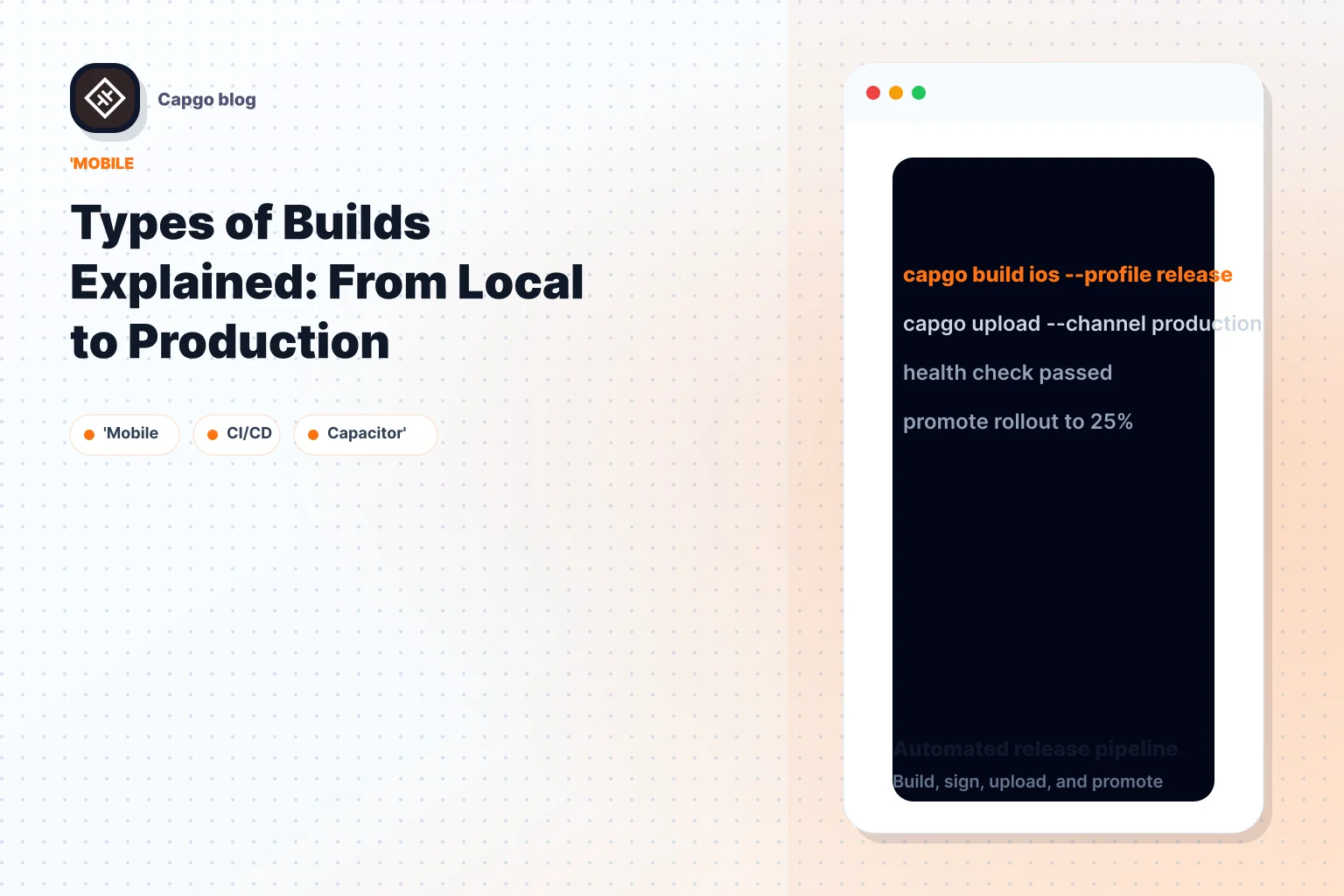
- Binärer Build in CI/CD: Erstellen, signieren und verteilen Sie die native App.
- Kanalzuweisung: Benutzer oder Umgebungen auf Beta, Staging, Produktions- oder Kunden-spezifische Streams abbilden.
- Selektive Veröffentlichung: Senden Sie Web-Änderungen an einer Gruppe, bevor sie breiter bekannt werden.
- Rückgängigmachung: ohne Wartepflicht einen schlechten Update zurücksetzen oder deaktivieren.
Wenn Sie das Modell noch nicht eingerichtet haben, folgen Sie diesem Leitfaden. Erstellen und Löschen von Update-Kanälen in Capacitor macht die Mechanik konkreter.
Ein kurzer Demo hilft, wenn Sie noch keine Kanäle in Aktion gesehen haben:
Dies ist der strategische Schwenk, den viele mobile Teams benötigen. Build-Typen sind nicht nur Artefakte. Sie sind Kontrollpunkte. CI/CD kontrolliert, wie Binärdateien erstellt werden. Kanäle kontrollieren, wie nach der Installation Änderungen freigegeben werden.
Best Practices für einen modernen Build-Workflow
Ein vernünftiger Build-System ist überzeugt. Es lässt jeden Entwickler nicht improvisieren, wie Releases verlaufen.
The strongest setups I’ve worked with share a few habits:
- Trennen Sie die Achsen klar: Flavor, Umgebung, Signiertziel und Verteilungsziel sollten nicht in einem vagen Label zusammengefasst werden.
- Lassen Sie CI-Produkte für das Team erstellen: lokale Builds sind für die Entwicklung, nicht für Vertrauen der Stakeholder.
- Testen Sie in bedarfsgerechten Bedingungen frühzeitig: QA- und Beta-Tester sollten Verhalten sehen, das der tatsächlichen App möglichst nahe kommt.
- Halten Sie Signings-Assets von Laptops fern: Geheimnisse sollten in kontrolliertem Infrastruktur mit engem Zugriff sein.
- Benenne Artefakte so, dass Menschen sie lesen können: Wenn jemand innerhalb von wenigen Sekunden nicht erkennen kann, wofür ein Datei ist, ist die Benennung schlecht.
- Legen Sie den Fokus auf die Förderung: Wenn ein Artefakt validiert wurde, bewege es stattdessen durch den Workflow voran, anstatt es manuell neu zu erstellen.
- Entwickle eine Rückschaltfunktion vor der Veröffentlichung: Die Speicherung einer Rückschaltfunktion ist langsam und betriebsintensiv. Die Rückschaltung auf der Web-Schicht für Capacitor-Updates kann viel schneller sein, aber nur, wenn Sie die Kanäle und Richtlinien zuvor geplant haben.
Der größte Denkwechsel besteht darin: Stelle nicht die Frage „Welche Build-Skript sollte ich ausführen?“ sondern „Welches Risiko verwaltet man an diesem Punkt?“ Diese Frage führt zu besseren Build-Systemen.
Wenn Ihr Workflow diese Frage klar beantwortet, wird Ihr Release-Prozess einfacher zu bedienen, einfacher zu überprüfen und viel weniger von einem erfahrenen Ingenieur abhängig, der die richtige Zaubersprache kennt.
Wenn Ihr Team Capacitor-Anwendungen bereitstellt und eine enge Kontrolle über die Release-Workflows wünscht Capgo ist im Rahmen dieser Stack-Auswahl zu bewerten. Es handhabt gezielte Live-Updates für Web-Assets innerhalb von Capacitor-Apps, unterstützt signierte Bundles, kanalbasierte Rollouts und Rollback-Kontrollen, was es nützlich macht, wenn schnelle Fixes benötigt werden, ohne die native Build-Pipeline zu ersetzen.