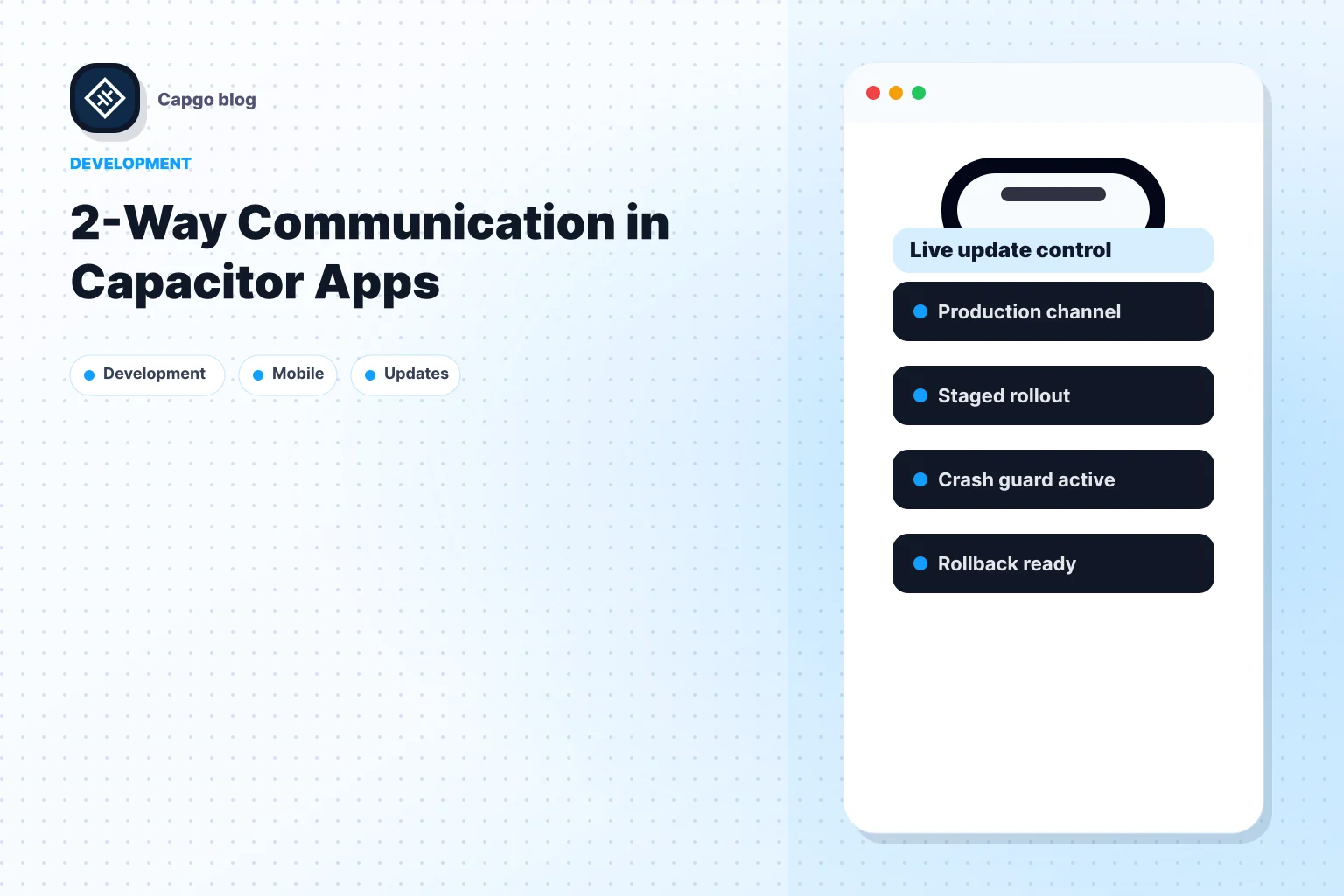
上下文: Capgo营销网站。角色: 短UI标签或导航项。见于: 组件 BlogAuthorByline.astro。消息键 `content_marketer` (内容营销)。 Capacitor应用中的双向通信 双向通信在__CAPGO_KEEP_0__
- __CAPGO_KEEP_0__不需要等待应用商店的延迟即可部署修复和功能。
- 应用程序将Web和本机层连接起来,实现实时数据交换。这使得Web技术能够访问本机设备功能,如摄像头或GPS,而本机层可以与Web元素交互。以下是为什么它很重要的原因:即时更新:
- 改进的用户体验: web 和原生功能的Smooth 整合。
- 全球范围: 系统如 Capgo 全球范围
: 系统如
- Capgo成功率达82%
- 快速事实:__CAPGO_KEEP_0__
- 更新速度:: 加密确保数据传输的安全性.
本指南解释了如何设置双向通信、实现自定义插件以及优化应用程序的性能. Capacitor 应用程序.
如何创建一个 Capacitor 上下文:产品页面/区域:实时更新产品页面。角色:页面或区域标题。见于:页面 live-update.astro。保留 Capgo 产品/品牌和开发者术语的原始形式。消息键 live_update_platform_capacitor_title (Live Update Platform Capacitor Title)。
YouTube 视频播放器
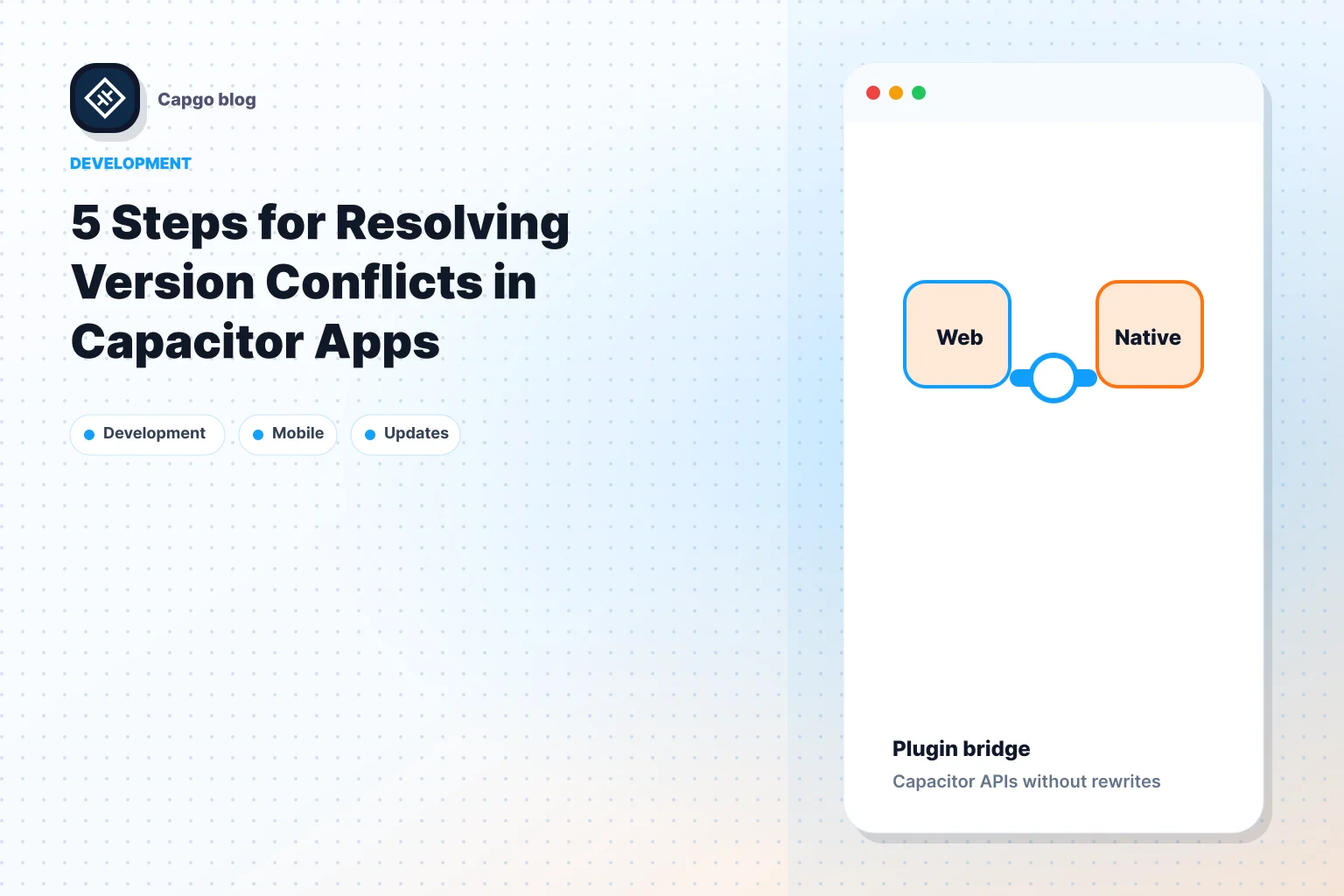
Capacitor 框架中的Capacitor桥梁为跨平台应用程序在web应用程序和native设备功能之间实现无缝通信提供了基础。
Capacitor 桥梁作为双向通信的骨干,确保了跨平台应用程序与原生设备功能之间的无缝通信。
如何使用 Capacitor 桥梁进行通信
| 层 | 功能 | 数据处理 |
|---|---|---|
| Web层 | 开始JavaScript调用 | 将数据转换为JSON格式 |
| 桥核心 | 管理消息路由和排队 | 验证和转换数据 |
| 原生层 | 执行平台特定操作 | 处理和反序列化数据 |
确保桥梁能够顺畅地进行通信,通过验证消息格式、转换数据类型以及将调用路由到适当的本机处理程序。它还提供了基于promise的响应,使得异步操作更容易处理。这个系统需要小心地设置才能成功地集成到您的项目中。
项目设置步骤
按照以下步骤配置您的项目以支持web本机通信:
-
设置项目结构
组织您的项目目录如下:
my-app/ ├── src/ │ ├── app/ │ └── plugins/ ├── ios/ ├── android/ └── capacitor.config.json -
配置本机平台
调整桥梁设置为每个平台的Capacitor配置文件。例如:
{ "plugins": { "CustomPlugin": { "ios": { "bridgeMode": "modern" }, "android": { "messageQueue": "async" } } } } -
实现桥梁
为桥梁设置最佳性能。例如,在Android上启用‘异步’模式以提高速度并确保在操作期间的稳定性。
通信方法
通过使用双向传输数据的特定方法来实现web和本机层之间的无缝两向通信。
web到本机调用
如何在Capacitor应用中实现web到本机通信:
// Custom plugin implementation
const MyPlugin = {
  echo: async (options: { value: string }) => {
    return Capacitor.Plugins.MyPlugin.echo(options);
  }
};

// Usage in web code
await MyPlugin.echo({ value: "Hello Native!" });
实现通信时需要考虑的关键问题:
| 方面 | 实现 | 最佳实践 |
|---|---|---|
| 数据类型 | 尽可能使用可序列化的JSON类型 | 当可能时坚持使用基本类型 |
| 错误处理 | 返回Promise | 在try-catch块中包装调用 |
| 性能优化 | 批量操作 | 合并相关调用以提高效率 |
原生到Web数据传输
原生code可以将数据发送到Web层并触发事件。具体如下:
// Set up a custom event listener in web code
window.addEventListener('myCustomEvent', (event) => {
  const data = event.detail;
  handleNativeData(data);
});

// Trigger the event from native code (Swift/Kotlin)
notifyWebView("myCustomEvent", {
  "status": "success",
  "data": nativeResponse
});
管理异步数据流
在Web和原生层之间处理异步操作需要谨慎规划。使用以下策略:
- 队列管理:维护一个消息队列来处理多个异步请求。
- 状态同步:保持Web和原生层之间的状态一致。
- 错误恢复:使用重试机制来处理失败的通信。
在Capacitor应用中,消息队列的例子
class MessageQueue {
  private queue: Array<Message> = [];

  async processMessage(message: Message) {
    await this.queue.push(message);
    await this.processQueue();
  }

  private async processQueue() {
    while (this.queue.length > 0) {
      const message = this.queue[0];
      try {
        await this.sendToNative(message);
        this.queue.shift();
      } catch (error) {
        await this.handleError(error);
        break;
      }
    }
  }
}
Capacitor 应用程序的双向通信指南
建立自定义插件
为了实现无缝的双向通信,您可以创建 自定义Capacitor插件:
// Define plugin interface
export interface MyCustomPlugin {
  sendMessage(options: { data: string }): Promise<{ result: string }>;
}

// Register plugin
@Plugin({
  name: 'MyCustomPlugin',
  platforms: ['ios', 'android']
})
export class MyCustomPluginImplementation implements MyCustomPlugin {
  async sendMessage(options: { data: string }): Promise<{ result: string }> {
    // Bridge to the native layer using a promise
    return await Capacitor.nativePromise('sendMessage', options);
  }
}
JavaScript与原生集成
您已经构建了自定义插件,可以将其集成到允许JavaScript直接与原生层通信的应用中:
class NativeIntegration {
  private static instance: NativeIntegration;
  private messageQueue: string[] = [];

  static getInstance(): NativeIntegration {
    if (!NativeIntegration.instance) {
      NativeIntegration.instance = new NativeIntegration();
    }
    return NativeIntegration.instance;
  }

  async sendToNative(data: any): Promise<void> {
    try {
      const plugin = Capacitor.Plugins.MyCustomPlugin;
      // Convert the data to JSON format before sending
      const response = await plugin.sendMessage({ data: JSON.stringify(data) });
      this.handleResponse(response);
    } catch (error) {
      this.handleError(error);
    }
  }

  private handleResponse(response: { result: string }): void {
    if (response.result === 'success') {
      // Immediately process any queued messages
      this.processQueue();
    }
  }

  private handleError(error: any): void {
    console.error('Error communicating with the native layer:', error);
  }

  private processQueue(): void {
    while (this.messageQueue.length) {
      console.log('Processing message:', this.messageQueue.shift());
    }
  }
}
此设置确保了JavaScript和原生code之间的可靠通信通道。
原生事件处理
要处理来自原生侧的事件,请使用事件管理器来管理事件监听器和数据分发:
class EventManager {
  private eventListeners: Map<string, Function[]> = new Map();

  registerListener(eventName: string, callback: Function): void {
    if (!this.eventListeners.has(eventName)) {
      this.eventListeners.set(eventName, []);
    }
    this.eventListeners.get(eventName)?.push(callback);
  }

  async dispatchEvent(eventName: string, data: any): Promise<void> {
    const listeners = this.eventListeners.get(eventName) || [];
    for (const listener of listeners) {
      await listener(data);
    }
  }
}

// Usage example
const eventManager = new EventManager();
eventManager.registerListener('dataReceived', (data) => {
  console.log('Received data:', data);
});

// Dispatch an event from native code
eventManager.dispatchEvent('dataReceived', {
  type: 'sensor',
  value: 42,
  timestamp: Date.now()
});
为了提高性能,请考虑分组事件或减少传输数据的大小。这一事件管理策略与前面描述的web-to-native和native-to-web通信方法相辅相成。
技术指南
数据安全
为了保护web层和native层之间的数据交换,实施强大的安全协议并使用端到端加密。
以下是TypeScript示例:
class SecureDataTransfer {
  private encryptionKey: CryptoKey;

  constructor() {
    this.encryptionKey = this.generateSecureKey();
  }

  async encryptData(data: any): Promise<ArrayBuffer> {
    const stringData = JSON.stringify(data);
    return await window.crypto.subtle.encrypt(
      { name: "AES-GCM", iv: window.crypto.getRandomValues(new Uint8Array(12)) },
      this.encryptionKey,
      new TextEncoder().encode(stringData)
    );
  }

  private async generateSecureKey(): Promise<CryptoKey> {
    return await window.crypto.subtle.generateKey(
      { name: "AES-GCM", length: 256 },
      true,
      ["encrypt", "decrypt"]
    );
  }
}
这种方法确保敏感数据在传输过程中被加密,从而降低潜在的漏洞。
Code优化
高效的code可以提高应用程序性能并符合平台要求。Capgo的指标验证了这些优化的影响 [1].
以下是批处理过程的示例,以提高效率:
class OptimizedDataTransfer {
  private static readonly BATCH_SIZE = 1000;
  private messageQueue: Array<any> = [];

  async batchProcess(): Promise<void> {
    while (this.messageQueue.length) {
      const batch = this.messageQueue.splice(0, OptimizedDataTransfer.BATCH_SIZE);
      await this.processBatch(batch);
    }
  }

  private async processBatch(batch: Array<any>): Promise<void> {
    const compressedData = await this.compress(batch);
    await this.send(compressedData);
  }

  private async compress(data: Array<any>): Promise<ArrayBuffer> {
    // Compression logic here
  }

  private async send(data: ArrayBuffer): Promise<void> {
    // Data transmission logic here
  }
}
这种方法可以最小化资源使用量并确保平稳的运行,即使在繁重的工作负载下也如此。
应用商店规则和更新
跟随 苹果应用商店 和 Google Play 商店 避免更新过程中出现违规问题的指南。
“App Store 合规” - Capgo [1]
为了更好地管理更新,包括版本控制和回滚功能:
class UpdateManager {
  private currentVersion: string;
  private previousVersion: string;

  async applyUpdate(newVersion: string): Promise<boolean> {
    try {
      this.previousVersion = this.currentVersion;
      this.currentVersion = newVersion;
      return true;
    } catch (error) {
      await this.rollback();
      return false;
    }
  }

  private async rollback(): Promise<void> {
    this.currentVersion = this.previousVersion;
  }
}
如罗德里戈·曼蒂卡所说:
“我们实行敏捷开发,@Capgo 在持续交付给用户方面至关重要!” [1]
这种设置确保您可以快速适应变化,同时保持平滑的用户体验。
结论
在Capacitor应用中,双向通信在保证快速更新和稳定性能方面起着至关重要的作用。web层和native层之间的smooth连接使得快速修复、快速发布新功能以及提供更好的用户体验成为可能。
live update平台的影响如数可见,尤其是像Capgo这样的平台。
| 指标 | 结果 |
|---|---|
| 更新速度 | 95% 的用户在 24 小时内完成更新 |
| 全球覆盖 | 1,400 个生产应用程序中的 947.6 亿次更新 |
| 可靠性 | 全球 82% 的成功率 |
开发者们通过他们的经验来支持这些结果。罗德里戈·曼蒂卡分享了:
“我们实行敏捷开发,@Capgo 在持续为用户交付方面是 mission-critical 的!” [1]
敏感数据在 web 和 native 层之间安全地管理,确保了已经在生产环境中使用这些系统的许多应用程序的信息安全 [1].
随着 Capacitor 技术的不断进步,保持安全高效的 web-native 通信通道将成为未来的应用开发的首要任务
常见问题
::: faq
如何让双向通信在Capacitor应用中提高web层和native层之间的连接?
两种方式的通信在Capacitor应用中简化了Web层和原生层之间的交互,使得特性和实时更新的集成变得更加顺畅。这一方法使开发者能够直接将修复、增强和新特性推送给用户,而无需等待应用商店的批准。
通过利用此功能,开发者可以提高应用性能、快速响应用户反馈并保持竞争优势。工具如Capgo可以进一步优化此过程,提供实时更新、端到端加密和符合平台要求,确保开发流程顺畅高效。
::: faq
如何为 Capacitor 应用创建自定义插件以提高性能?
Creating custom plugins in Capacitor apps can significantly improve performance and tailor functionality to your app’s specific needs. Here are a few best practices to follow:
- 优化原生Code 确保您的原生 code 效率高,避免不必要的计算。为 iOS 使用语言特定的优化。Swift/iOS(Objective-C)和Android(Java)/Kotlin).
- 减少通信开销: 降低web层和native层之间数据交换的频率和大小,以提高响应性。
- 在真实设备上测试: 始终在实际设备上测试插件,以识别可能在模拟器中未出现的性能瓶颈。
如果您想简化更新并保持平滑的应用性能,平台如Capgo可以提供帮助。Capgo允许您立即推送更新,确保您的插件和应用始终保持优化状态,无需等待应用商店批准。
:::
How can developers secure data when enabling two-way communication between web and native layers in Capacitor apps?
开发者如何在Capacitor应用中启用web和native层之间的双向通信时保护数据? 在__CAPGO_KEEP_0__应用中实现双向通信时确保数据安全涉及实施关键最佳实践。使用 端到端加密
Capacitor apps can also benefit from secure storage solutions for sensitive information and leveraging HTTPS for all network communication. While the article highlights tools like Capgo for secure live updates, these foundational practices are critical for maintaining robust app security. :::
Keep going from 2-Way Communication in Capacitor Apps
::: 两向通讯在Capacitor应用中 为native插件工作制定计划,连接它 Capgo 插件目录 为Capgo 插件目录中的产品工作流 Capacitor 插件由Capgo 为Capacitor 插件由Capgo中的实现细节 添加或更新插件 为添加或更新插件中的实现细节 Ionic企业插件替代品 为Ionic企业插件替代品中的产品工作流 Capgo 本机构建 为Capgo 本机构建中的产品工作流