You already know the pattern. Monday starts with a flaky CI run, someone re-triggers the pipeline, and half the team loses the first hour to waiting. By Wednesday, a copy tweak sits in App Review while support asks why the onboarding message still says the old thing. On Thursday, an Electron renderer bug reaches a customer before anyone notices, and now engineering, support, and product are all in the same thread trying to reconstruct what changed.
Esa semana no es solo un problema de entrega. experiencia del desarrollador showing up in the only way that really matters, through the texture of daily work. When feedback is slow, environments are brittle, and release paths are opaque, the team feels it in code, in morale, and in user trust.
experiencia del desarrollador
- A Week in the Life of a Cross-Platform Mobile Team
- ¿Qué significa realmente la experiencia del desarrollador?
- ¿Por qué la DX importa a los líderes de ingeniería y la empresa?
- Medir la experiencia del desarrollador sin fatiga de encuestas
- Los puntos dolorosos comunes en Capacitor, Ionic y Electron
- A Practical Playbook to Improve DX Across the Stack
- How Live Update Platforms Change the DX Equation
- Mejorando DX como una Disciplina Operativa Instrumentada
Una Semana en la Vida de un Equipo de Desarrollo de Aplicaciones Móviles
El equipo es pequeño, pero la superficie de trabajo es enorme. Una base de código alimenta una aplicación Capacitor para iOS y Android, un cliente de escritorio Electron y una construcción web que comparte la mayoría de la lógica. Ese setup parece eficiente en papel, hasta que el camino de liberación comienza a dividirse en una docena de puntos de bloqueo diminutos.
El lunes, la compilación es roja por razones que nadie asume
Un cambio en la interfaz de usuario no debería necesitar una historia de detectives, pero eso es lo que sucede cuando CI flaquea en un paso de envoltura nativa o un trabajo de firma falla en medio de la ejecución. Alguien reconfigura la pipeline. Alguien más inicia un segundo trabajo. La rama de características que debería haberse fusionado antes de la comida sigue esperando una verificación verde a las 4 p.m.
Lo mismo se repite en equipos de desarrollo de aplicaciones en todas partes, el code en sí mismo no es el trabajo único, las transiciones alrededor de él también son trabajo. flujo de vista previa para cada solicitud de extracción es una de las pocas formas prácticas de mantener esa transición de no convertirse en adivinanzas.
Miércoles está atrapado en revisión
Un error de ortografía inocente en una solicitud de permiso se convierte en un problema de tiempo. La versión web se corrige en minutos, pero el cambio móvil tiene que respetar la revisión de la tienda, la coordinación de liberación y lo que ya está programado detrás de ella. Cuando el texto se envía, el contexto original ha cambiado, y el soporte ha respondido la pregunta tres veces.
Es allí donde la experiencia del desarrollador deja de ser abstracta. El equipo no solo está molesto, sino que está quemando tiempo en la fricción repetible que podría haber sido un cambio normal code.
Jueves’os bug de escritorio se convierte en un evento de lanzamiento
Electron puede ser tolerante hasta que no lo es. Un pequeño problema del renderizador llega a producción, el proceso de actualización necesita ser verificado, y ahora la 'pequeña corrección' se ha convertido en un camino de lanzamiento completo con code firmado, empaquetado, validado y comunicación con el cliente. La code delta es pequeña, la carga operativa no lo es.
Si un pequeño cambio necesita un lanzamiento ceremonial, el equipo tratará a los cambios pequeños como caros.
Por el viernes, todos están ocupados, pero no necesariamente productivos. La semana ya ha mostrado la forma del problema; cada retraso en el sistema de entrega se convierte en un lastre para las personas que hacen el trabajo y los usuarios que lo esperan.
¿Qué significa realmente la Experiencia del Desarrollador?
La experiencia del desarrollador, o DX, es la experiencia de construir, cambiar, probar y enviar software en una pila particular. Incluye las herramientas, la plataforma, el proceso y las personas que rodean el trabajo. En términos simples, es cómo se siente obtener code desde la idea hasta la producción sin luchar con el sistema en cada paso.
Las tres dimensiones que hacen que la DX sea medible
Un modelo útil trata a la DX como tres dimensiones técnicas interaccionantes bucles de retroalimentación, carga cognitiva y estado de flujoAquí no hay jerga, son los mecanismos detrás de por qué un equipo puede moverse con calma mientras otro pasa el día reiniciando el contexto.
Los bucles de retroalimentación son sobre cuánto tiempo un desarrollador aprende si una modificación funcionó. La carga cognitiva es la cantidad de sobrecarga mental necesaria para realizar una modificación de manera segura. El estado de flujo es la capacidad de mantenerse enfocado lo suficiente para resolver un problema real sin interrupciones constantes.
The dimensions interact. Slow validation makes developers hold more state in working memory, which raises cognitive load, which breaks concentration, which drags the work out even further. That framing is consistent with the ACM Queue guidance on the three dimensions of developer productivity, and with practitioner advice to keep DX surveys short, usually 5-10 preguntas5-10 preguntas en un plazo de10 minutos trimestral ritmo marco de la ACM Queue en los bucles de retroalimentación, carga cognitiva y estado de flujo.
La experiencia del desarrollador no es lo mismo que la felicidad del desarrollador
La felicidad es real, pero es demasiado vaga para guiar un sistema de ingeniería. Un equipo puede decir que está "bien" mientras vive con compilaciones lentas, entornos frágiles y reglas de lanzamiento poco claras. Una puntuación de encuesta más alta no te dice si el bucle de retroalimentación es saludable o si el equipo puede cambiar code sin llevar una docena de preocupaciones no relacionadas en su cabeza.
Un mejor programa de DX combina lo que las personas sienten con lo que hace el sistema. Eso es el punto de la visión operativa desde experiencia del desarrollador herramientas y patrones de medición, donde el objetivo no es la vibra, sino la eliminación de fricción acciónable. Si no puedes unir el señal a un flujo de trabajo real, no estás midiendo DX, estás recopilando sentimiento.
Regla práctica: si la queja no se puede mapear a una compilación, una entrega, una prueba o un paso de lanzamiento, probablemente no es lo suficientemente específico para solucionar.
En la práctica, eso significa que el DX es menos "¿A los desarrolladores les gusta trabajar aquí?" y más "¿Pueden mover cambios a través del sistema con confianza, velocidad y mínimo retraso?" Eso es una pregunta muy diferente, y conduce a inversiones muy diferentes.
Por qué el DX importa a los líderes de ingeniería y la empresa
Los líderes de ingeniería no necesitan otro lema sobre ser más amables con los desarrolladores. Necesitan una forma de conectar la fricción diaria en la entrega a los resultados que la empresa ya sigue, retención, velocidad y recuperación de incidentes. El DX importa porque se encuentra dentro de esos resultados, no a su lado.
La retención y la velocidad están vinculadas a través de la fricción
Cuando los desarrolladores pasan demasiado tiempo esperando, re-ejecutando tareas o desenredando flujos de trabajo confusos, esa frustración se refleja en el sistema de entrega. Ralentiza las liberaciones, aumenta los errores evitables y empuja a las personas experimentadas hacia la salida. La empresa paga dos veces, primero en productividad perdida, luego en el costo de reemplazar el conocimiento del equipo que tomó tiempo construir.
El señal práctico es simple. Si los equipos siguen golpeando los mismos puntos de fricción, la organización está quemando tiempo en trabajo evitable en lugar de enviar cambios con confianza. Eso es por qué el DX tiene que tratarse como una preocupación operativa, no como un tema de moral.
Equipos de empresas tienen una barrera más alta que rápida
En entornos regulados o de alto riesgo, el DX no puede reducirse a la comodidad. La revisión de seguridad, la auditoría, la confianza de rollback y el control de cambios son parte de la experiencia. Un flujo que se siente rápido pero hace que los ingenieros se sientan incómodos al enviar es un DX débil, porque oculta el riesgo en lugar de reducirlo.
Un mejor DX es un proceso mejor diseñado, no un proceso menos. Los guardrails adecuados reducen la incertidumbre y el retrabajo, lo que es lo que necesitan los equipos de empresas cuando los errores son costosos. Esa visión se alinea con la idea de DX como un plan maestro para la productividad empresarial, donde el sistema de trabajo importa tanto como las herramientas que lo componen. experiencia del desarrollador como plan maestro de productividad empresarial.
El Live update trabajo hace que el caso empresarial sea concreto
Los equipos de desarrollo de aplicaciones móviles en múltiples plataformas sienten la DX de manera más clara cuando la calidad de la liberación depende del camino de actualización en vivo. Si un empujón OTA es difícil de validar, lento para revertir o opaco a nivel de dispositivo, los desarrolladores pierden confianza y los líderes pierden el control sobre el riesgo. Un proceso saludable hace que sea fácil ver qué dispositivos recibieron un cambio, si la actualización se comportó como se esperaba y qué pasó cuando algo salió mal. Por eso monitoreo de salud de la aplicación para flujos de trabajo live update pertenece a la conversación de DX, no a un contenedor de operaciones separado.
El caso empresarial se vuelve más agudo cuando se unen esas señales. Los caminos de cambio más rápidos y más seguros permiten a los equipos enviar con más confianza. Los mecanismos de liberación más limpios reducen la carga de soporte. Los bucles de retroalimentación más claros dan a los líderes una visión más confiable de dónde se encuentra la organización atascada, ya sea en la fricción de la construcción, la vacilación de la liberación o el tiempo de recuperación después de un despliegue malo.
Medir la Experiencia del Desarrollador sin Fatiga de Encuestas
El mayor error de medición es tratar de aprender todo de una sola encuesta. No obtienes una visión clara si preguntas demasiado, preguntas demasiado a menudo o solo confías en lo que las personas dicen sin verificar qué está haciendo el sistema. Un programa de experiencia de desarrollo maduro utiliza dos clases de señales, telemetría y percepción, y mantiene ambas ligeras.
Un punto de partida mejor es el flujo de trabajo en sí mismo. Cuando los compilados se ralentizan, CI/CD se atasca, los entornos fallan al iniciar o los nuevos contratados tardan demasiado en alcanzar su primer commit, la fricción ya es visible. Eso son los lugares donde los equipos pierden tiempo antes de que code comience la revisión.
Comienza con los números que puedes confiar. Los tiempos de compilación, la duración de la canalización, el tiempo de configuración del entorno, el tiempo hasta el primer commit para nuevos contratados y la frecuencia de problemas en el entorno de desarrollo muestran dónde el proceso está perdiendo esfuerzo. Si también sigues los señales de nivel de aplicación a través de monitoreo de salud de la aplicación para flujos de trabajo live updatepuedes conectar la fricción del desarrollador local con lo que sucede una vez code llega a dispositivos reales.
La guía de la industria de métricas de ingeniería para la experiencia del desarrollador recomienda triangulando esas señales del sistema con entrevistas y encuestas de satisfacción, no reemplazando una con la otra. Eso importa porque los compilados lentos y las canalizaciones frágiles hacen más que retrasar la salida, crean trabajo, cambios de contexto y incertidumbre. El framework de la cola de ACM hace el mismo punto básico en términos prácticos, mide el sistema y pregunta a las personas sobre su experiencia, luego compara las dos.
Mantenga la encuesta breve y repítala en un ritmo
El lado humano debe ser rápido de responder y fácil de comparar con el tiempo. Mantenga la encuesta a 5-10 preguntasfinalice en menos de 10 minutosy ejecute trimestralmente Para que puedas ver el cambio sin agotar a la gente. Cualquier cosa más larga se convierte en un impuesto para la misma gente que estás tratando de ayudar.
Una buena encuesta no trata de ser ingeniosa. Pregúntale a los desarrolladores si pueden hacer cambios locales y probarlos de manera efectiva, si se sienten confiados modificando el código base y si pueden mantener un tiempo de concentración ininterrumpido. Esas preguntas se relacionan de manera clara con las tres dimensiones que importan, y son lo suficientemente específicas como para desencadenar acción.
Aquí está el patrón de medición que funciona en la práctica:
- La telemetría primero: capturar duración de compilación, problemas de entorno y estabilidad de la canalización para que sepas dónde está escapando el tiempo.
- Percepción segunda: Preguntar a los desarrolladores dónde el trabajo parece lento, confuso o riesgoso.
- Comparar por equipo: raramente los equipos de móviles, escritorios y web tienen el mismo perfil de fricción.
- Revisar trimestralmente: tiempo suficiente para ver una tendencia, pero no tanto que los datos se vuelvan obsoletos.
Hábito útil: si un métrica nunca cambia después de que un equipo dice que duele, la encuesta probablemente fue demasiado vaga o la acción fue demasiado débil.
Esa combinación mantiene la experiencia del desarrollador en el suelo. La telemetría muestra qué pasó, las encuestas explican por qué se sintió mal, y el pair juntos son mucho más útiles que cada uno solo.
Puntos de dolor comunes en Capacitor, Ionic y Electron
Los equipos de múltiples plataformas comparten muchos de los mismos dolores, incluso cuando la empaque parece diferente. El code puede ser compartido, pero el camino de liberación sigue rompiéndose en compilaciones nativas, revisión de plataforma, canales de distribución y peculiaridades por plataforma que no se importan cómo elegante es la arquitectura de la aplicación.
Capacitor y Ionic todavía chocan con la realidad nativa
Capacitor y los equipos de Ionic suelen enfrentar los mismos problemas de clase, binarios firmados, rotación de clave de firma, retrasos en la revisión de la Tienda de Aplicaciones y Play, y el comportamiento de la zona segura específico de la plataforma que solo aparece en dispositivos reales. La transición nativa se convierte en el punto de botella, especialmente cuando los desarrolladores web necesitan ayuda de alguien que entiende la firma de compilación o la empaque de la tienda.
Es ahí donde la DX a menudo se derrumba. Un cambio que parece pequeño en el navegador puede convertirse en una dependencia de lanzamiento una vez que toca el empaque móvil o la configuración nativa. Si el equipo no puede probar la experiencia completa rápidamente, la retroalimentación llega demasiado tarde para ser útil.
Electron tiene un conjunto diferente de aristas afiladas
Los equipos de Electron suelen luchar menos con la revisión de la tienda y más con la mecánica de distribución. La firma de Code en Windows y macOS, la confiabilidad de la actualización automática y la validación de la versión pueden convertirse en sus propios mini-programas. Un error en el renderizador puede ser pequeño en el control de fuentes y enorme en impacto operativo si fuerza un nuevo tren de lanzamiento.
La diferencia es importante. En móvil, el dolor a menudo proviene de las puertas de la plataforma. En escritorio, a menudo proviene de la mecánica de actualización y la confianza. En ambos casos, el costo de la DX es el mismo, el ingeniero tiene que pensar en demasiadas restricciones de lanzamiento antes de que pueda enviar una pequeña corrección.
Una forma rápida de mapear el problema es por etapa:
- Etapa de construcción: firma, empaque, reproducibilidad.
- Etapa de validación: pruebas en dispositivos, verificación de actualización, paridad de entorno.
- Etapa de lanzamiento: revisión de tienda, selección de canal, confianza de lanzamiento.
- Etapa de soporte: reproducir la versión y el estado del cliente.
Cuanto más pueda una equipo unir cada punto de dolor a una etapa, más fácil se vuelve arreglar la cosa correcta primero.
Capacitor, Ionic y Electron no fallan porque sus equipos carecen de talento. Fallan cuando los mecanismos de liberación obligan a cada cambio a pasar por el mismo camino costoso, sin importar cuán trivial sea el cambio en realidad.
A Practical Playbook to Improve DX Across the Stack
Las mejoras en DX más fuertes suelen no ser dramáticas. Son el resultado de eliminar unos pocos puntos de fricción obstinados en el orden correcto para que el equipo obtenga alivio compuesto. La onboarding, la retroalimentación local, la disciplina de CI, la seguridad de tipos y la observabilidad cada una pullan en una parte diferente del flujo de trabajo, y cada una cambia cómo se siente el siguiente cambio.
Haga el primer camino verde obvio
Los nuevos ingenieros deberían poder obtener una compilación funcionante sin convertirse en ingenieros de liberación primero. Si necesitan conocimientos tribales para instalar dependencias, ejecutar la aplicación o validar un cambio, el equipo ya ha convertido la DX en un aprendizaje oculto. La onboarding limpia es una de las formas más rápidas de exponer la verdadera forma del sistema.
Acortar el bucle antes de optimizar la pila
Los modos de observación local, los simuladores y las banderas de características importan porque reducen el tiempo entre el cambio y la retroalimentación. Eso no solo ahorra minutos, reduce el costo mental de la experimentación. Cuando un desarrollador puede probar un cambio localmente, deja de tratar cada edición como una apuesta de todo el stack.
Estandarice CI solo después de que el equipo esté de acuerdo en el flujo de trabajo
Las mejoras de CI son más fáciles de desperdiciar. La caché, los trabajos paralelos y los artefactos de construcción firmados ayudan, pero solo cuando el pipeline refleja el flujo de liberación real y no una pila de excepciones históricas. El pago proviene de la repetibilidad, no de agregar más trabajos
Los beneficios de la integración continua son más visibles cuando un equipo deja de tratar a CI como un servidor de compilación y comienza a tratarlo como parte del bucle de retroalimentación del desarrollador
Estreche el contrato entre capas
Las interfaces tipadas entre web y nativo code reducen la ambigüedad. No eliminan todos los bugs de integración, pero sí reducen la carga cognitiva haciendo explícitas las expectativas. Eso es especialmente valioso cuando múltiples equipos comparten el mismo camino de liberación pero no razonan sobre él de la misma manera
Agregue observabilidad donde el usuario sienta el cambio
La telemetría de producción debe mostrar si el cambio que realizaste se comportó como se esperaba en un dispositivo real. Si una implementación alcanza la producción pero no puedes determinar qué dispositivos recibieron qué, o si se necesitó un rollback, tu camino de liberación sigue siendo ciego. Una buena observabilidad convierte ‘Creo que se envió’ en ‘Sabemos qué pasó’
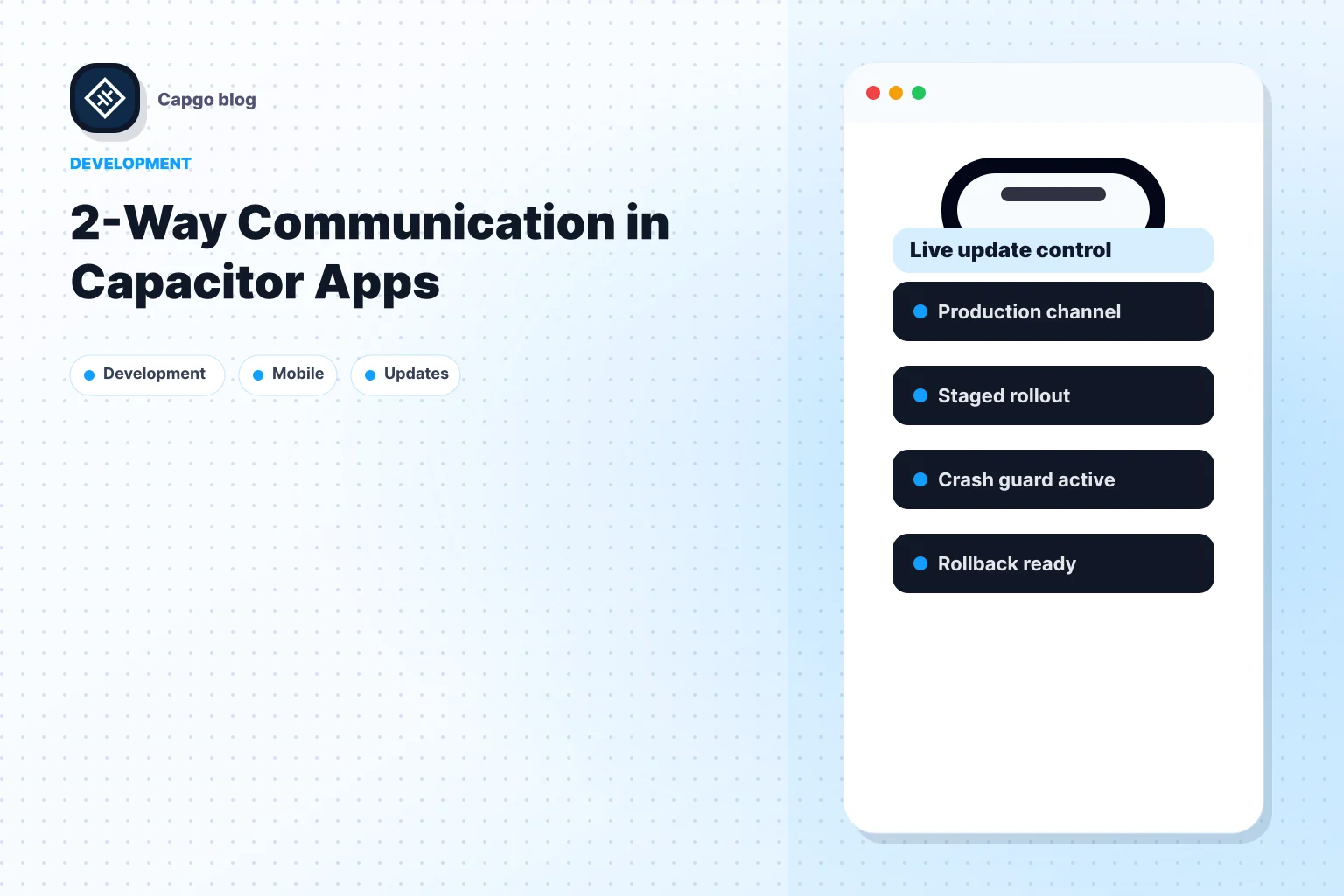
Una herramienta en este espacio es Capgoque proporciona actualizaciones OTA para Capacitor y aplicaciones Electron, con paquetes firmados, canales, protección de rollback, registros por dispositivo y actualizaciones diferenciales. Usada correctamente, herramientas como esa pueden convertir pequeñas correcciones en trabajo normal de ingeniería en lugar de un ceremonial de liberación
La orden importa. No comience con la pila de observabilidad más sofisticada si la onboarding todavía está rota y cada ejecución local es un combate. Arregle el camino que el desarrollador toca más a menudo, luego avance hacia afuera.
Cómo Live Update Plataformas Cambian la Fórmula de la DX
Una corrección móvil que espera la revisión de la tienda ya es costosa en tiempo de desarrollador. Un live update camino cambia esa ecuación reduciendo la brecha entre un cambio en code y un cambio en un dispositivo real. En equipos de desarrollo cruzaplatforma, eso importa para actualizaciones de copia, cambios de configuración, JavaScript, CSS y activos, porque esos son los editados que a menudo se quedan atrás del proceso de lanzamiento incluso cuando no requieren un ciclo completo de tienda de aplicaciones.

Las correcciones pequeñas ya no son excepcionales
El beneficio de la DX es menos sobre la velocidad bruta y más sobre hacer que los cambios pequeños sean normales. Cuando una corrección de copia o una modificación de configuración pasa por el mismo camino que otros code, los ingenieros permanecen en el flujo de trabajo que ya conocen en lugar de detenerse para reabrir los rituales de empaque, firma y lanzamiento para una corrección menor.
Eso cambia la forma de trabajar. Actualizaciones diferenciales envían solo lo que cambió, lo que significa que una edición pequeña ya no requiere reconstruir y redistribuir todo a su alrededor. El lanzamiento se siente proporcional al cambio, y el peso operativo se mantiene más cerca del riesgo real. Para una visión clara de los mecanismos de entrega, consulte how live updates for Capacitor work.
Rollout control becomes part of the feedback loop
Los canales dirigidos para flujos beta, producción o específicos de clientes convierten las actualizaciones en un experimento controlado. Un cambio malo puede contenerse con protección de rollback, mientras que uno bueno puede verificarlo a través de registros por dispositivo y historia de versiones en lugar de suponerlo a partir de la charla de soporte después del hecho.
La visibilidad importa porque cierra el ciclo entre la entrega y el impacto. Un ingeniero de soporte puede inspeccionar el estado del dispositivo, confirmar qué paquete aterrizó y verificar si se produjo el rollback. La conversación se acorta porque el equipo está mirando la evidencia, no la memoria.
La revisión de la tienda ya no es la única historia de lanzamiento.
Las revisiones de la tienda de aplicaciones y Play todavía importan, pero ya no necesitan definir cada arreglo. Las plataformas Live update permiten a los equipos móviles manejar una gran cantidad de cambios de alta frecuencia como trabajo de ingeniería ordinario, lo que cambia cómo las personas experimentan el camino de lanzamiento. Ya no se siente como un borde del acantilado y comienza a sentirse como un canal controlado con un radio de explosión más estrecho.
El cambio de DX es estructural. Las actualizaciones más rápidas mejoran los bucles de retroalimentación, reducen la carga mental de tratar cada pequeño edición como un evento de lanzamiento importante y protegen el flujo porque los desarrolladores pasan menos tiempo presupuestando para el overhead de lanzamiento. Eso es una afirmación de flujo, no un lema.
Hacer que el DX sea una Disciplina Operativa Instrumentada
La DX funciona mejor cuando alguien la posee y el equipo la revisa como cualquier otro sistema operativo. Una encuesta trimestral ayuda, pero no es un programa en sí mismo. Si nadie es responsable de las señales, el trabajo nunca suma.

Coloque la propiedad junto a las métricas
Comience con un propietario nombrado, luego elija un conjunto pequeño de medidas de base de ambas partes del sistema y la encuesta. Revisarlas con la misma seriedad que daría a la confiabilidad de la liberación o las tendencias de incidentes. La fórmula de Gartner ayuda aquí. Una vez que la DX se trata como un factor operativo medible a través de herramientas, plataformas, procesos y personas, deja de parecer una iniciativa cultural vaga Gartner sobre experiencia de desarrollador.
El propietario no necesita controlar cada herramienta o cada equipo. El trabajo es mantener el bucle de medición honesto, hacer visible la fricción y empujar el trabajo de seguimiento a la rutina operativa normal. En equipos en los que he trabajado, eso significa usualmente una persona o un pequeño grupo que puede pedir los datos, detectar el desplazamiento y forzar una decisión cuando los números y las anécdotas no coinciden.
Un proceso mejor es la respuesta más común
La reacción por defecto es eliminar el proceso cada vez que los ingenieros se quejan. Eso puede ayudar en algunos lugares, pero falla en entornos regulados y de empresa donde la auditoría, la confianza de rollback y el control de cambios importan. La mejor opción es diseñar el proceso para que agregue certeza en lugar de arrastre.
Eso significa que los próximos treinta días deberían centrarse en unos pocos movimientos concretos, no en un programa de transformación:
- Nombre de un dueño de DX: dé a una persona o un pequeño equipo la responsabilidad del ciclo de medición y la seguimiento.
- Establecer la fricción obvia como punto de partida: tiempo de compilación, duración de la pipeline, configuración del entorno y problemas de entorno de desarrollo.
- Realiza una encuesta trimestral breve: manténgalo enfocado en los bucles de feedback, carga cognitiva y estado de flujo.
- Instrumenta el camino de lanzamiento: hacer visible el comportamiento de actualización en dispositivos reales, no solo en CI.
- Elimina una botella de botella de lanzamiento: ataca el paso que hace que los cambios pequeños se sientan caros.
El punto no es perseguir un puntaje perfecto de sentimiento del desarrollador. El punto es construir un sistema donde el equipo pueda ver la fricción rápidamente, arreglarla deliberadamente y seguir enviando sin convertir cada cambio en una ceremonia.
Si su equipo de desarrollo de plataformas multiproducto sigue tratando a las pequeñas correcciones como lanzamientos importantes, comience haciendo un camino más seguro y rápido este mes. Explore cómo Capgo maneja las actualizaciones OTA, los canales, la protección de devolución y la visibilidad a nivel de dispositivo, y luego compare ese flujo de trabajo con su proceso de lanzamiento actual y decida dónde vive el retraso más doloroso.