Real-time updates let you deliver app changes instantly without waiting for app store approvals. Pairing this with user segmentation allows you to target specific groups, test features, and personalize experiences effectively. Here’s how it works:
- Real-Time Updates: Send bug fixes and new features directly to users, reaching 95% within 24 hours.
- User Segmentation: Group users (e.g., beta testers, power users) to test updates, roll out gradually, and tailor app experiences.
- Key Metrics to Track: Session duration, feature usage, update adoption, and error rates.
- Tools: Capgo ensures fast, secure updates with global success rates of 82% and detailed analytics.
- Benefits: Faster updates, reduced risks, personalized features, and improved engagement.
Start by defining user segments, installing Capgo (npx @capgo/cli init), and tracking update performance to refine your strategy.
Building Blocks of User Segmentation
User Data Collection
To create meaningful user segments, you first need to track how users interact with your app. Focus on gathering key metrics like these:
| Data Type | Purpose | Impact |
|---|---|---|
| Session (Duration) | Understand engagement levels | Spot power users vs. casual users |
| Feature Usage | Identify popular functions | Prioritize which features to enhance |
| Update Response | Measure update adoption | Refine rollout strategies |
| Error Rates | Monitor app stability | Pinpoint and address issues for segments |
Using Capgo’s analytics, you can track update success rates and user engagement, offering detailed insights into how different users interact with your app [1]. This data forms the backbone of effective user segmentation.
Creating User Segments
Once you’ve collected the data, the next step is to group users into segments using Capgo’s channel system. This allows developers to manage updates and test features with precision.
“We rolled out Capgo OTA updates in production for our user base of 5,000. We’re seeing very smooth operation; almost all our users are up to date within minutes of the OTA being deployed to @Capgo.” – colenso, @colenso [1]
Developers can organize users into categories like beta testers, power users, new users, or enterprise accounts. This segmentation helps in testing updates, rolling them out gradually, or tailoring features for specific groups.
| Segment Type | Description | Update Strategy |
|---|---|---|
| Beta Testers | Early adopters testing features | Get updates first |
| Power Users | Highly engaged, frequent users | Prioritize performance improvements |
| New Users | Recently joined the platform | Simplify feature rollouts |
| Enterprise | Business or organizational accounts | Use scheduled maintenance windows |
Capgo’s tools make it easy to adjust these segments as user behavior changes, ensuring your updates and features stay relevant [1].
Setting Up Segmented Updates
Key User Actions to Track
To better understand user engagement and app usage, focus on specific behaviors that highlight patterns. Based on data from 750 production apps, these actions have proven to be the most insightful:
| User Action | Why Track It | Impact on Updates |
|---|---|---|
| Feature Usage Frequency | Identifies heavy users vs. casual ones | Helps prioritize updates |
| Session Duration | Measures engagement levels | Informs the timing of updates |
| Error Encounters | Highlights stability concerns | Guides where hotfixes are needed |
| Update Installation Time | Shows deployment efficiency | Refines rollout strategies |
Once you’ve identified these key metrics, it’s time to choose the right tools to implement segmented updates effectively.
Update Tools and Setup
For segmented updates to work smoothly, you need reliable tools that ensure compliance and efficiency. Look for tools that meet these benchmarks for performance:
- 95% active user update adoption within 24 hours
- Global CDN performance: 5MB bundle delivered in 114ms
- 82% worldwide update success rate
- Global API response time: 434ms
With these tools in place, thorough testing is essential to confirm everything runs as planned.
Testing Segment Performance
Testing ensures updates are effective and well-received. Use a structured approach to evaluate performance across different user segments:
| Testing Phase | Implementation | Success Metric |
|---|---|---|
| Beta Testing | Release to early adopters first | Gather user feedback and bug reports |
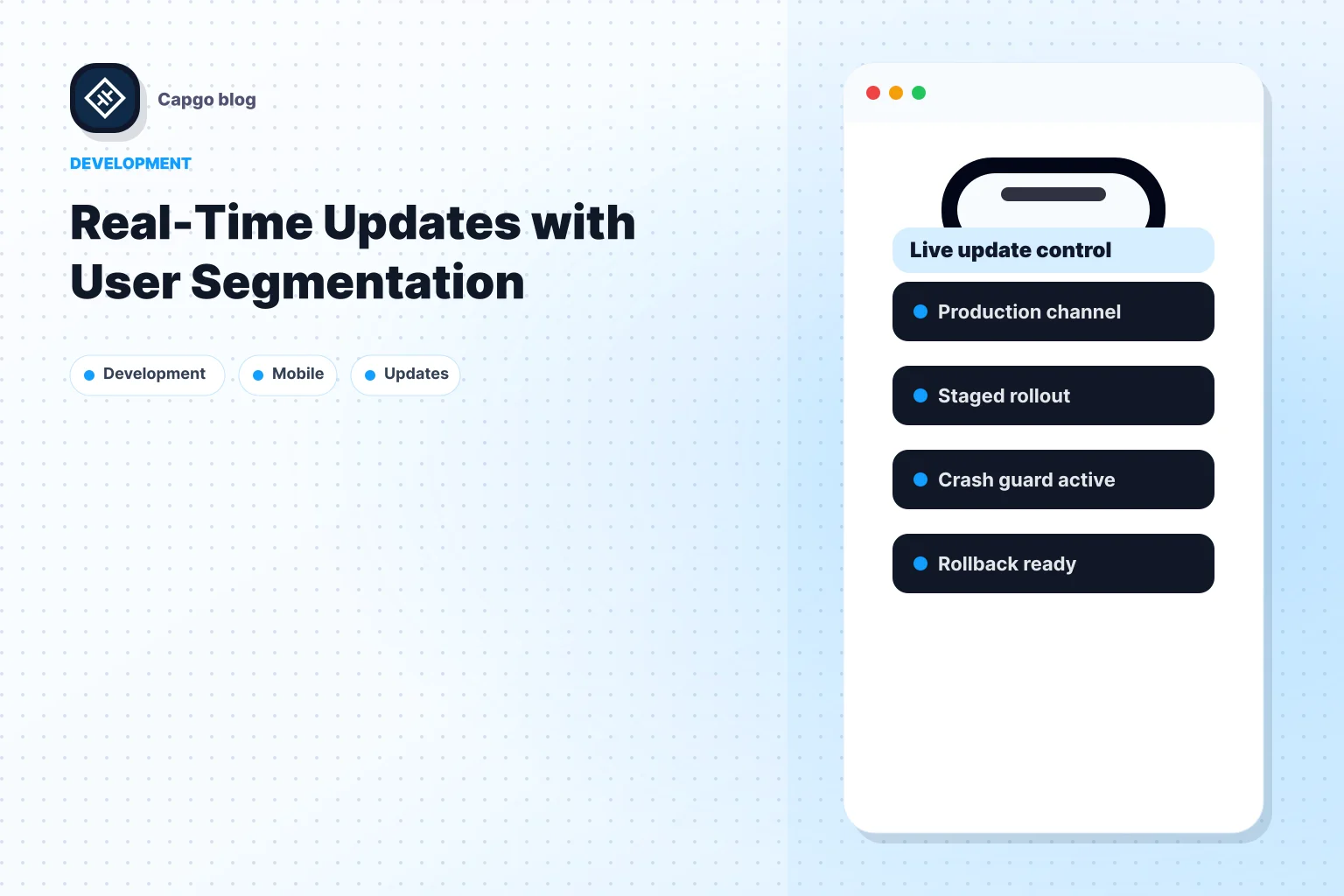
| Staged Rollout | Gradually increase deployment percentages | Measure update success rates |
| Performance Monitoring | Track metrics for each segment | Assess engagement post-update |
| Rollback Readiness | Enable one-click version reversion | Minimize downtime if issues arise |
It’s crucial to maintain clear segment boundaries and closely monitor how each group responds to updates. Analytics will help fine-tune your approach.
For enterprise apps, setting up separate testing channels for major user segments ensures you can maintain the 82% update success rate while managing diverse user bases across regions and usage patterns.
Personalizing App Experiences
Customizing Features for Different User Groups
With real-time segmentation, developers can adjust app features to suit different user groups. For example, advanced tools can be offered to power users, while new users might see a simpler interface to help them get started. By tracking engagement as it happens, these adjustments can be fine-tuned continuously to meet the needs of each group. This approach also influences how you communicate with users.
Smart Push Notifications
Send notifications that matter, when they matter. By tailoring both the message and timing to match the habits of specific user groups, you can keep active users informed and bring inactive ones back into the fold. This targeted approach ensures your notifications make an impact.
Capgo’s Update Management System

To support these personalized interactions, effective update management is key. Capgo’s channel system provides precise control over updates, allowing for beta testing, phased rollouts, and feature releases targeted to specific user segments. With real-time analytics and detailed permission settings, Capgo ensures compliance with app store rules - especially important for enterprise apps.
Tracking Results and Success
Performance Metrics
Analytics play a crucial role in tracking how updates perform. Key indicators include update success rates, how quickly users adopt updates, and levels of engagement. For example, 95% of active users install updates within 24 hours, and the global success rate for updates stands at 82% [1].
Testing Different Approaches
Using these metrics, systematic testing helps fine-tune your update strategy. A/B testing is especially useful for identifying which segmentation methods work best.
| Testing Component | What to Measure | Why It Matters |
|---|---|---|
| Update Timing | Installation rates at various times | Helps determine the best release schedules |
| Segment Criteria | User engagement within each segment | Confirms the effectiveness of segmentation |
| Feature Rollouts | Usage rates across user groups | Validates the value of new features |
During testing, tracking errors is essential. It allows you to catch issues early, fix them quickly, and maintain app stability [1].
Measuring Business Impact
Real-time, segmented updates don’t just enhance technical performance - they also deliver clear business benefits. Measuring these benefits can provide actionable insights.
Key metrics to focus on include:
- User Retention: Examine how updates influence long-term engagement.
- Support Tickets: Track whether targeted updates reduce customer support issues.
- Development Efficiency: Measure time saved in deployment and fixing bugs.
- User Satisfaction: Analyze app ratings and feedback across user groups.
Step-by-Step Guide to Real-Time PLG with Segment and …
Next Steps
Ready to put segmented real-time updates into action? Here’s a step-by-step guide to help you implement them effectively.
Main Points
Start by installing the Capgo plugin (npx @capgo/cli init), then define user segments based on behavior and your business goals. Finally, set up a monitoring system to ensure a global update success rate of 82% [1]. This setup allows you to deploy updates instantly without app store reviews, all while staying within platform guidelines.
Here are the three key elements to focus on:
- Technical Setup: Install the Capgo plugin using the command:
npx @capgo/cli init. - Segmentation Strategy: Group users based on engagement, behavior, and objectives. This allows you to send targeted updates to specific user channels.
- Monitoring Framework: Track update performance and fine-tune delivery for better results.
Let’s look at how to quickly implement this strategy using Capgo.
Start Using Capgo
Getting started with Capgo is simple and designed for speed and reliability. By combining segmentation and monitoring, you can deliver updates securely and efficiently. Capgo’s channel system gives you precise control over how updates are distributed, making it ideal for beta testing and phased rollouts.
Here’s a quick implementation breakdown:
| Phase | Action Items | Expected Outcome |
|---|---|---|
| Initial Setup | Install the Capgo plugin and configure it | A strong update foundation |
| Segmentation | Define user channels and target groups | Organized update delivery |
| Deployment | Use the CLI to roll out updates and monitor | Fast and controlled rollout |
| Optimization | Analyze performance and adjust targeting | Improved efficiency |
Capgo’s advanced user management tools allow you to control updates at a granular level. For teams following agile development practices, features like end-to-end encryption and detailed analytics ensure updates are both secure and high-performing.
Keep going from Real-Time Updates with User Segmentation
If you are using Real-Time Updates with User Segmentation to plan live update delivery, connect it with Capgo Live Updates for the product workflow in Capgo Live Updates, Overview for the implementation detail in Overview, Features for the implementation detail in Features, Update Behavior for the implementation detail in Update Behavior, and Update Types for the implementation detail in Update Types.