수익 전략서
설치 단계와 이 플러그인의 전체 마크다운 가이드를 포함하는 설정 지시어를 복사하세요.
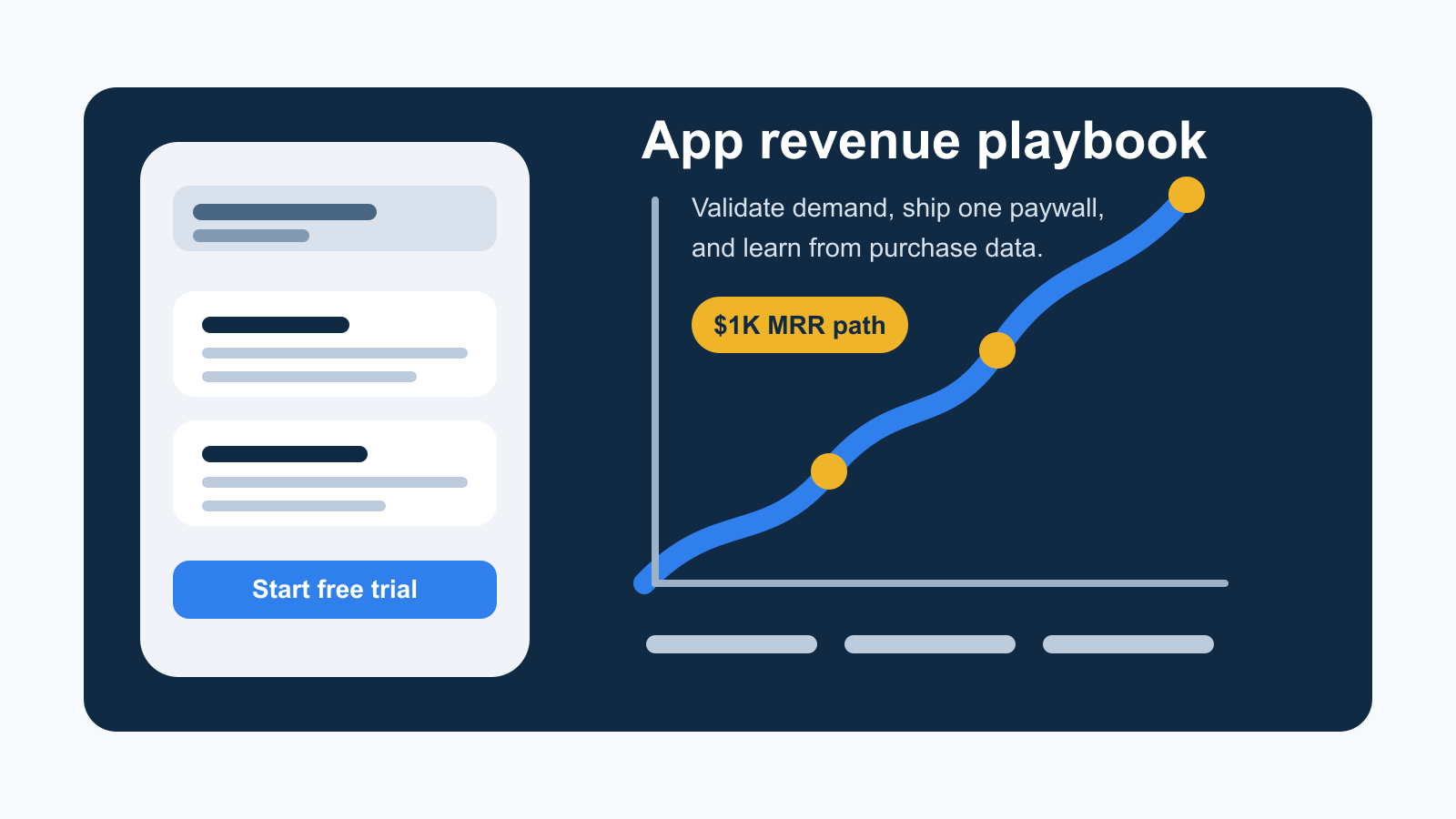
앱에서 돈을 벌기 위해 SDK 구매는 단지 하나의 부분입니다. 수입은 명확한 문제, 사용자가 시도할 수 있는 작은 제품, 신뢰할 수 있는 스토어 결제, 그리고 사람들이 구매할 수 있는 것을 가르치는 결제 벽으로부터 나옵니다.
이 플레이북을 사용할 때는 구독 또는 프리미엄 언락과 함께 추가하는 경우에 사용하세요. @capgo/native-purchases.
단순한 수입 목표부터 시작하세요.
제목 ‘단순한 수입 목표부터 시작하세요.’첫 번째 목표를 구체화하세요. 예를 들어:
| 월간 가격 | 약 $1K MRR를 위해 약 400명의 활성 구독자 필요합니다. |
|---|---|
| $4.99 | 201 |
| $7.99 | 126 |
| $9.99 | 101 |
| 연간 $29.99 | 약 400명의 연간 구독자, 시간에 따라 달라집니다. |
이 숫자들은 스토어 수수료, 세금, 환불, 통화 차이점과 같은 것들보다 앞서 있습니다. 여전히 유용합니다. 왜냐하면 런칭 계획이 실용적이기 때문입니다: 몇 백 명의 동기부여된 사용자만 필요합니다. 대규모 청중이 필요하지 않습니다.
가장 작은 유료 제품을 구축하세요.
제목 ‘가장 작은 유료 제품을 구축하세요.’-
어떤 고통스러운 사용 사례를 선택하세요
사용자가 이미 찾는 결과에 따라 빌드하세요. 예를 들어, 새로운 부모에게 운동 계획, 커플에게 예산 추적기, 프리랜서에게 영수증 스캐너, 또는 한 시험에 언어 연습 앱
-
요구량을 체크하세요
앱 스토어와 구글 플레이에서 핵심 키워드를 검색하세요. 경쟁 앱의 낮은 및 중간 점수 리뷰를 읽어 보세요. 누락된 기능, 혼란스러운 온보딩, 가격 불만, UI 마찰을 찾으세요.
-
좁은 MVP를 배달하세요
첫 번째 버전은 온보딩, 유용한 코어 액션, 기본 오류 처리, 충분한 분석을 포함해야 합니다. 사용자가 가치 순간에 도달하는지 여부를 확인할 수 있어야 합니다.
-
구매를 빠르게 추가하세요
앱이 완전한 것처럼 느껴질 때까지 기다리지 마세요. 기본적인 결제 벽을 통해 사용자가 가치 이해를 하고 가격이 합리적인지 여부를 학습하세요.
최적화하기 전에 파이프라인을 측정하세요
이벤트를 추적하세요가격이나 화면을 변경하기 전에 추적해야 하는 이벤트들입니다.
| 이벤트 | 왜 중요합니까? |
|---|---|
install 먼저 열거나 | 기준 트래픽 |
onboarding_completed | 사용자가 설정을 이해하는가 |
core_action_completed | 제품이 가치 제공하는가 |
paywall_viewed | 사용자가 수익화에 도달하는가 |
trial_started | 제안이 매력적이냐 |
purchase_completed | 유료 전환 |
restore_started 그리고 restore_completed | 구매 복구 및 검토 준수 |
subscription_status_checked | 권한 신뢰성 |
cancel_feedback_submitted | 회원 탈퇴 이유 |
많은 사용자가 결제 벽을 보지 못한다면, 온보딩을 먼저 수정하세요. 결제 벽을 보는 사용자가 trial을 시작하지 않는다면, 제안, 증명, 가격 제시를 개선하세요.
한 가지 수익 모델을 선택하세요
수익 모델을 선택하세요한 가지 모델부터 시작하여 데이터를 읽기 쉽게 하세요.
| 모델 | 적합한 선택 | 첫 번째 버전 |
|---|---|---|
| Freemium | 프리미엄 | 일상 생활에서 반복적으로 사용하는 유틸리티, 트래커, 도구 |
| 무료 기본 동작, 유료 제한 또는 프리미엄 기능 | 결제 벽에 무료 trial이 포함된 모델 | 온보딩 후 3일에서 14일까지의 무료试用 후 결제 벽 |
| 一次性解锁 | 작은 도구에 한하여 반복적인 가치가 제한된 경우 | 기본 제품에 대한 수명과 옵션으로 나중에 구독을 추가하는 제품 |
첫날에 세 개의 등급, 많은 패키지, 복잡한 업그레이드 경로를 배제하십시오. 한 달에 한 번, 한 해에 한 번의 구독이 필요할 때만 월간 및 연간 계획을 사용하십시오. 국가에서 의미 있는 트래픽을 보게 되면 지역화된 가격을 추가하십시오.
수익을 위한 제품 구성
제품 구성하기제품 식별자에 대해 안정적이고 읽을 수 있는 것을 유지하십시오:
com.example.app.premium.monthlycom.example.app.premium.yearlycom.example.app.premium.lifetime사용자가 찾고 있는 가치에 대한 강조를 하는
월간
import { NativePurchases, PURCHASE_TYPE } from '@capgo/native-purchases';
const { products } = await NativePurchases.getProducts({  productIdentifiers: [    'com.example.app.premium.monthly',    'com.example.app.premium.yearly',  ],  productType: PURCHASE_TYPE.SUBS,});
const monthly = products.find((product) => product.identifier.endsWith('.monthly'));const yearly = products.find((product) => product.identifier.endsWith('.yearly'));
UI에서 매출처리 가격을 직접 입력하지 마세요. product.priceString매출처리 가격, 제품 제목, 청구 기간 및 시험 기간을 매출 데이터에서 가능한 한 지역화하세요.
첫 번째 결제벽을 구축하세요.
첫 번째 결제벽첫 번째 결제벽은 명확해야 합니다.
- 제목: 유료 결과, 예를 들어 "무제한 운동 계획을 해제하세요."
- 장점: 3에서 5개의 구체적인 개선점, 장기적인 기능 목록이 아닌.
- 계획: 월간 및 연간, 연간 절약이 제공되는 경우 실제 연간 절약.
- 시험: 정확한 시험 기간 및 시험 기간이 끝난 후 무엇이 일어나는지.
- CTA: "무료 시험 시작" 또는 "현재 업그레이드".
- 링크: 약관, 개인 정보 보호 정책, 구매 복원 및 구독 관리.
첫 번째 결제벽을 온보딩 후에 위치시키세요. 사용자가 앱이 무엇을 하는지 이해한 후에. 나중에 사용량 제한, 프리미엄 기능 탭 또는 코어 액션 완료와 같은 추가 트리거를 테스트하세요.
구매 및 복원 흐름
구매 및 복원 흐름 섹션import { NativePurchases, PURCHASE_TYPE } from '@capgo/native-purchases';
export async function buyYearly(appAccountToken: string) { const transaction = await NativePurchases.purchaseProduct({ productIdentifier: 'com.example.app.premium.yearly', planIdentifier: 'yearly-plan', productType: PURCHASE_TYPE.SUBS, appAccountToken, });
await fetch('/api/purchases/validate', { method: 'POST', headers: { 'content-type': 'application/json' }, body: JSON.stringify({ transactionId: transaction.transactionId, receipt: transaction.receipt, purchaseToken: transaction.purchaseToken, productIdentifier: transaction.productIdentifier, }), });
return transaction;}
export async function restorePurchases() { await NativePurchases.restorePurchases();
return NativePurchases.getPurchases({ productType: PURCHASE_TYPE.SUBS, });}구매를 승인하기 전에 백엔드에서 항상 구매를 검증하세요. 빠른 UI를 위해 로컬 권한 캐시를 유지하세요. 그러나 스토어와 백엔드만 진실의 근원으로 간주하세요.
첫 번째 사용자를 끌어들이기
첫 번째 사용자를 끌어들이기 섹션수익은 트래픽이 필요합니다. 브랜드가 아직 없을 때도 작동할 수 있는 채널부터 시작하세요:
- ASO: 제목, 서브제목, 키워드, 스크린샷, 앱 설명, 아이콘, 평점, 및 인앱 구매 이름.
- 단축된 비디오: 목표 국가에 대한 문제/해결 및 전/후 예시를 포함한 빠른 데모, 문제/해결 클립, 및 전/후 예시를 게시하세요.
- 레딧 및 커뮤니티: 대화에 참여하세요. 그리고 유용한 이야기로 대신하여 광고가 아닌 스토리를 공유하세요.
- 베타 그룹: 테스트 플라이트, 구글 플레이 내부 테스트, 디스코드, 및 특정한 포럼.
각 채널은 사용자를 동일한 측정된 파이프라인으로 보내야 하므로 유사한 유입률, 지속률, 결제 뷰, 시험, 및 구매를 비교할 수 있습니다.
정상적인 사용자 유실을 올바르게 읽어라
정상적인 사용자 유실을 올바르게 읽어라어떤 사용자가 앱을 사용해보고 결국 사용하지 않는다는 것은 정상적인 현상입니다. 중요한 것은 패턴입니다.
- trial 기간 중 취소: 불분명한 가치, 나쁜 온보딩, 또는 잘못된 트래픽.
- 1회 주기 후 취소: 반복적인 가치가 부족하거나 약한 습관 루프.
- 환불: 가격 불일치, 실수로 구매 위험, 또는 불분명한 조건.
- 복원되지 않음: 권한 처리가 깨진 경우 또는 복원 UI가 누락된 경우.
가능한 경우 1개의 질문으로 취소 설문조사를 추가하고, 사용자들의 답변을 통해 온보딩, 기능 범위, 스토어 스크린샷, 및 페이월 복사본을 개선하라.
출시 준비 목록
출시 준비 목록- 제품은 하나의 명확한 유료 문제를 해결합니다.
- 스토어 제품은 iOS와 Android에서 테스트되어 활성화되어 있습니다.
- 가격표시와 약관이 저장된 스토어에서 표시됩니다.
- 구매, 복원, 구독 관리 및 백엔드 검증이 implement되었습니다.
- 구매부터 구매까지의 파이프라인 이벤트가 추적됩니다.
- 앱 스토어 메타데이터는 첫 번째 스크린샷에서 가치 설명합니다.
- 최소한 한 개의 인수 채널이 출시 전에 활성화되었습니다.
- 첫 번째 구독자들로부터 churn feedback가 수집되었습니다.
관련된 안내서
관련된 안내서수익 계획서에서 계속 진행하세요
수익 계획서에서 계속 진행하세요Revenue Playbook을 사용 중이라면 수익 계획서 Revenue Playbook을 사용하여 지불 및 구매를 계획하고 있다면, Using @capgo/native-purchases Using @capgo/native-purchases Capgo 가격 정책 Capgo Pricing 결제 시스템 결제 시스템 @capgo/자연스러운 구매 @capgo/native-purchases, 시작하기 Getting Started.
Capacitor 앱을 출시하세요 wait-free
iOS 및 Android 앱을 Mac 없이 빌드하고, 1 클릭으로 되돌리며, 사용자에게 빠르게 수정을 푸시하는 기능을 제공합니다.


기업 고객의 요구 사항? 우리 팀과 대화하세요