Einnahme-Handbuch
Eine Einrichtungsvorschlag mit den Installationsanweisungen und der vollständigen Markdown-Anleitung für diesen Plugin kopieren.
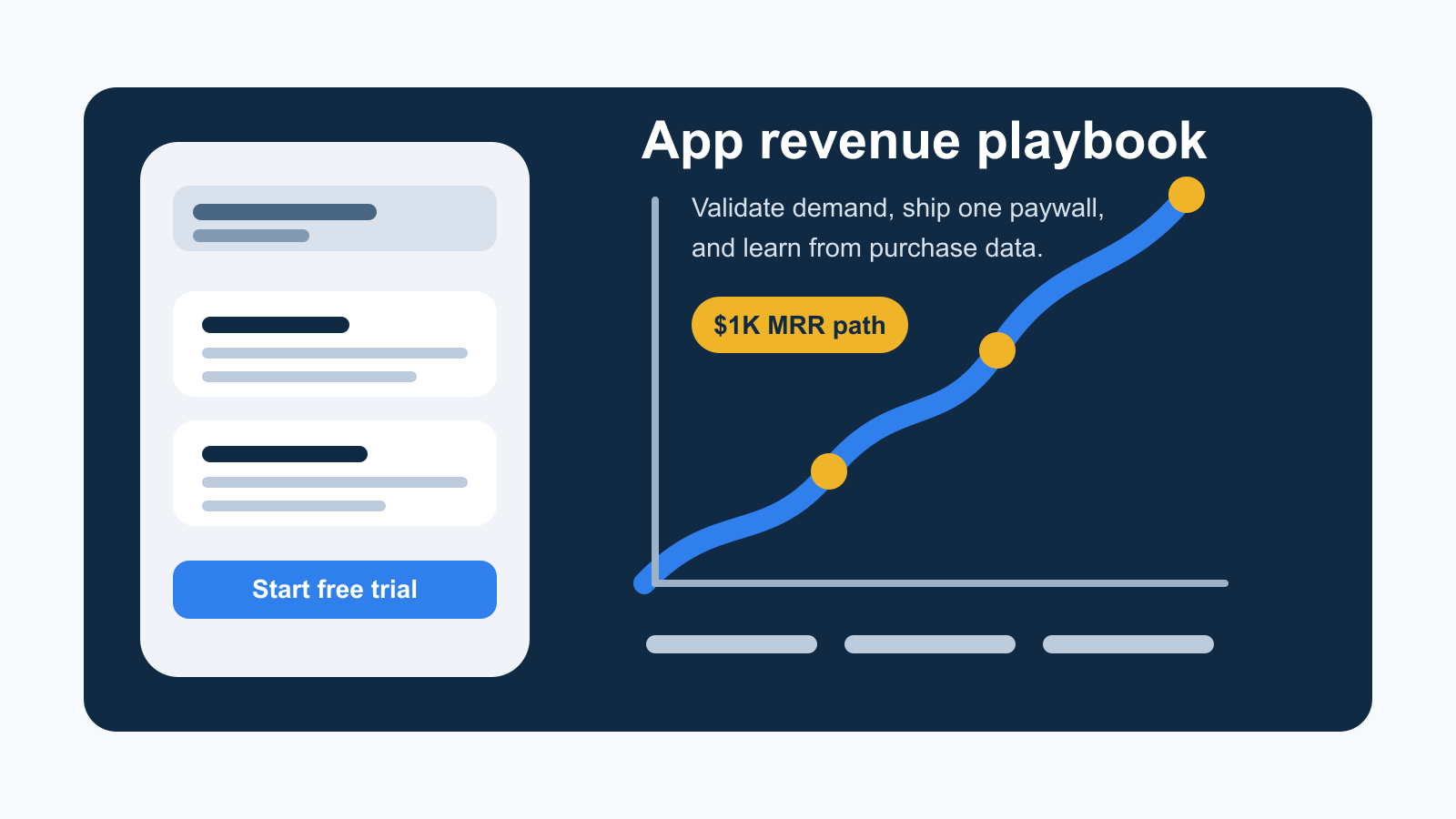
Der Kauf SDK ist nur ein Teil des Geldverdienens aus einer App. Der Umsatz kommt von einem klaren Problem, einem kleinen Produkt, das Benutzer ausprobieren können, einer zuverlässigen Store-Billigung und einer Paywall, die Ihnen zeigt, was Menschen bereit sind, zu kaufen.
Verwenden Sie dieses Playbook, wenn Sie Subskriptionen oder Premium-Zugänge hinzufügen möchten mit @capgo/native-purchases.
Beginnen Sie mit einem einfachen Umsatzziel
Sektion mit dem Titel “Beginnen Sie mit einem einfachen Umsatzziel”Stellen Sie das erste Ziel konkret. Zum Beispiel:
| Monatlicher Preis | Für etwa 1.000 $ MRR benötigen Sie etwa aktive Abonnenten |
|---|---|
| $4.99 | 201 |
| $7.99 | 126 |
| $9.99 | 101 |
| Jährlicher Preis von 29,99 $ | Für etwa 400 jährliche Abonnenten, je nach Zeitpunkt |
Diese Zahlen sind vor Store-Gebühren, Steuern, Rückerstattungen und Währungsunterschieden. Sie sind immer noch nützlich, weil sie das Launch-Plan praktisch halten: Sie benötigen ein paar hundert motivierte Benutzer, nicht eine riesige Zielgruppe.
Bauen Sie das kleinstmögliche bezahlte Produkt
Abschnitt mit dem Titel ‘Den kleinsten bezahlten Produkt bauen’-
Wählen Sie einen schmerzhaften Use Case
Bauen Sie sich um einen Ausgangspunkt, den Benutzer bereits suchen. Beispiele: Ein Workout-Plan für neue Eltern, ein Budget-Tracker für Paare, ein Rechnungsscanner für Freiberufler oder ein Sprachübung-App für ein Prüfung.
-
Überprüfen Sie die Nachfrage in den Stores
Suchen Sie im App Store und Google Play nach dem Kernwort. Lesen Sie die Bewertungen von konkurrierenden Apps mit niedrigen und mittleren Bewertungen, um fehlende Funktionen, verwirrende Einrichtung, Preisbeschwerden und Benutzeroberflächenschwierigkeiten zu finden.
-
Schicken Sie ein enges MVP
Die erste Version sollte Onboarding, eine nützliche Kernaktion, grundlegende Fehlerbehandlung und ausreichende Analysen enthalten, um zu sehen, ob Benutzer das Wertmoment erreichen.
-
Fügen Sie Kaufsätze frühzeitig hinzu
Warten Sie nicht, bis die App komplett ist. Ein grundlegender Paywall hilft Ihnen zu lernen, ob Benutzer den Wert verstehen und ob Ihr Preis plausibel ist.
Instrumentieren Sie den Kanal, bevor Sie optimieren.
Bezeichnung: "Das Kanal vor der Optimierung instrumentieren"Diese Ereignisse vor dem Anpassen von Preisen oder Bildschirmen tracken:
| Ereignis | Warum es wichtig ist |
|---|---|
install oder öffnen Sie es zuerst | Referenzverkehr |
onboarding_completed | Ob die Benutzer die Einrichtung verstehen |
core_action_completed | Ob das Produkt Wert bietet |
paywall_viewed | Ob die Benutzer die Monetarisierung erreichen |
trial_started | Ob die Angebotsentscheidung überzeugend ist |
purchase_completed | Bezahlte Umwandlung |
restore_started und restore_completed | Kaufwiederherstellung und Überprüfungskonformität |
subscription_status_checked | Zugriffsverlässlichkeit |
cancel_feedback_submitted | Verlustursache |
Wenn viele Benutzer die Bezahlbarkeit nicht sehen, beheben Sie die Einarbeitung, bevor Sie die Bezahlbarkeit ändern. Wenn Benutzer die Bezahlbarkeit sehen, aber keine Testphase beginnen, verbessern Sie das Angebot, die Beweise oder die Preispräsentation.
Wählen Sie ein Monetarisierungsmodell
Abschnitt mit dem Titel ‘Wählen Sie ein Monetarisierungsmodell’Beginnen Sie mit einem Modell, damit die Daten lesbar sind.
| Modell | Gute Passform | Erste Version |
|---|---|---|
| Freemium | Tägliche Werkzeuge, Tracker, Tools mit Wiederholungsnutzung | Kernfunktion kostenlos, begrenzte Funktionen oder Premiumfunktionen |
| Bezahlbarkeit plus kostenlose Testphase | Apps, die schnelle Werte nach der Einrichtung liefern | Paywall nach der Einrichtung mit 3- bis 14-tägiger Testphase |
| Einzelfrager-Aktivierung | Kleine Werkzeuge mit begrenzter wiederkehrender Wert | Lebenslanges Produkt mit optionaler zukünftiger Abonnementmöglichkeit |
Vermeide die Lieferung von drei Ebenen, vielen Paketen und komplexen Upgradepfaden am ersten Tag. Verwende einen monatlichen und einen jährlichen Plan, wenn du Abonnements benötigst. Füge lokalisierte Preise hinzu, nachdem du bedeutende Traffic aus einem Land gesehen hast.
Konfiguriere Produkte für Einnahme-Lernen
Abschnitt mit dem Titel “Konfiguriere Produkte für Einnahme-Lernen”Halten Sie Produktidentifikatoren stabil und lesbar:
com.example.app.premium.monthlycom.example.app.premium.yearlycom.example.app.premium.lifetimeVerwenden Sie Produktnamen im Laden, die den Wert bestätigen, nach dem sich die Benutzer suchen, wie z. B. “Monatliches Mahlzeitplaner-Pro” anstatt nur “Monatlich”. Speichern Sie Metadaten und In-App-Kaufnamen, um Entdeckung und Klarheit zu erleichtern.
Laden Sie Produkt-Daten aus den Läden, damit Preise, Währungen und Einführungsangebote immer genau sind:
import { NativePurchases, PURCHASE_TYPE } from '@capgo/native-purchases';
const { products } = await NativePurchases.getProducts({  productIdentifiers: [    'com.example.app.premium.monthly',    'com.example.app.premium.yearly',  ],  productType: PURCHASE_TYPE.SUBS,});
const monthly = products.find((product) => product.identifier.endsWith('.monthly'));const yearly = products.find((product) => product.identifier.endsWith('.yearly'));
Vermeide die Festlegung von Ladenpreisen im Benutzeroberflächen-Code. product.priceStringWann immer möglich, lokalisierte Produkttitel, Abrechnungszeitraum und Probezeitbedingungen aus Laden-Daten ab.
Erstelle eine erste Zahlungswand
Ein erster Bezahlwall bauenEine erste Zahlungswand sollte klar und nicht clever sein:
- Überschrift: Der bezahlte Ausgangspunkt, wie z.B. “Unbegrenzte Workout-Pläne freischalten”.
- Vorteile: 3 bis 5 konkrete Verbesserungen, nicht eine lange Liste von Funktionen.
- Pläne: monatlich und jährlich, mit echten jährlichen Ersparnissen, wenn angeboten.
- Probezeit: genaue Probezeit und was nach Ablauf passiert.
- CTA: “Freitrial starten” oder “Jetzt upgraden”.
- Links: Bedingungen, Datenschutzrichtlinie, Wiederherstellen von Käufen und Abonnements verwalten.
Platzieren Sie die erste Paywalle nach dem Onboarding, sobald der Benutzer versteht, was die App tut. Später testen Sie zusätzliche Trigger wie Nutzungsbeschränkungen, Premium-Funktionstaps oder abgeschlossene Kernaktionen.
Kauf- und Wiederherstellungsfluss
Abschnitt: "Kauf- und Wiederherstellungsfluss"import { NativePurchases, PURCHASE_TYPE } from '@capgo/native-purchases';
export async function buyYearly(appAccountToken: string) { const transaction = await NativePurchases.purchaseProduct({ productIdentifier: 'com.example.app.premium.yearly', planIdentifier: 'yearly-plan', productType: PURCHASE_TYPE.SUBS, appAccountToken, });
await fetch('/api/purchases/validate', { method: 'POST', headers: { 'content-type': 'application/json' }, body: JSON.stringify({ transactionId: transaction.transactionId, receipt: transaction.receipt, purchaseToken: transaction.purchaseToken, productIdentifier: transaction.productIdentifier, }), });
return transaction;}
export async function restorePurchases() { await NativePurchases.restorePurchases();
return NativePurchases.getPurchases({ productType: PURCHASE_TYPE.SUBS, });}Validieren Sie immer die Kaufs auf Ihrem Backend, bevor Sie dauerhafte Berechtigungen gewähren. Halten Sie eine lokale Berechtigungskachel für schnelles UI, aber behandeln Sie den Laden und Ihr Backend als Quelle der Wahrheit.
Bringen Sie die ersten Benutzer herein
Abschnitt: "Bringen Sie die ersten Benutzer herein"Einnahmen benötigen Verkehr. Beginnen Sie mit Kanälen, die funktionieren, bevor Sie eine Marke haben:
- ASO: Titel, Untertitel, Schlüsselwörter, Screenshot, App-Beschreibung, Icon, Bewertungen und Namen für In-App-Käufe.
- Kurzformvideo: Posten Sie schnelle Demos, Problem-Lösungs-Clips und vor- und nachher-Beispiele für das Zielland.
- Reddit und Communities: Beitreten Sie zunächst zum Gespräch, dann teilen Sie, was Sie gebaut haben, als nützliches Story anstatt als Anzeige.
- Beta-Gruppen: TestFlight, Google Play-Interner Test, Discord und Nischenforen.
Jeder Kanal sollte die Benutzer in den gleichen Messkanal leiten, damit Sie die Wiederbeschaffung, die Zahlungsbarr-Ansichten, die Testphasen und die Kaufzahlen vergleichen können.
Churn richtig lesen
Sektion mit dem Titel ‘Churn richtig lesen’Einige Abbrüche bedeuten, dass die Nutzer das App ausprobiert haben und sie nicht für sie geeignet fanden. Das ist normal. Was zählt, ist das Muster:
- Stornierungen während der Probezeit: unklare Wertigkeit, schlechte Einrichtung oder falsche Zielgruppe.
- Stornierungen nach einem Zyklus: nicht genug Wiederholungswert oder schwache Gewohnheitsschleife.
- Rückerstattungen: Preisfehler, ungewollte Kaufrisiko oder unklare Bedingungen.
- No restores: broken entitlement handling or missing restore UI.
Fügen Sie bei Bedarf eine einfrage-Kündigungs-Umfrage hinzu. Nutzen Sie die Antworten, um die Onboarding-Erfahrung, die Funktionsumfang, die Store-Screenshots und die Paywall-Kopie zu verbessern.
Startcheckliste
Sektion mit dem Titel ‘Startcheckliste’- Das Produkt löst eine klare, bezahlte Problematik.
- Produkte im Store sind aktiv und auf iOS und Android getestet.
- Die Paywall zeigt Ladenpreise und -bedingungen an.
- Kauf, Wiederherstellung, Verwaltung von Abonnements und Backend-Validierung sind implementiert.
- Die Kanalereignisse werden von der ersten Öffnung bis zum Kauf verfolgt.
- Das App-Store-Metadaten erklären den Wert in den ersten Screenshots.
- Zumindest eine Akquisitionsquelle ist vor dem Launch aktiv.
- Rückgabeanfragen von den ersten Abonnenten werden gesammelt.
Verwandte Anleitungen
Abschnitt mit dem Titel „Verwandte Anleitungen“- Anleitung zum Starten
- iOS-Abonnements erstellen
- Android-Abonnements erstellen
- iOS Sandbox-Testung
- Android Sandbox-Testung
Weitermachen aus dem Revenue Playbook
Abschnitt mit dem Titel “Weitermachen aus dem Revenue Playbook”Wenn Sie “Revenue Playbook” verwenden Einnahme-Handbuch um Zahlungen und Kaufsabschlüsse zu planen, verbinden Sie es mit Verwenden Sie @capgo/native-purchases für die native Fähigkeit in Verwenden Sie @capgo/native-purchases Capgo Preisgestaltung für den Produktworkflow in Capgo Preisgestaltung Bezahlungssystem für die Implementierungsdetails im Zahlungssystem @capgo/native-Einkäufe für die Implementierungsdetails in @capgo/native-purchases und Getting Started für die Implementierungsdetails in Einstieg.
Versenden Sie Capacitor-Apps ohne Wartezeit
Push-Fixes an Benutzer in Minuten, bauen Sie signierte iOS- und Android-Apps ohne Mac und rufen Sie einen Rollback in einem Klick ab.


Unternehmen benötigen? Kontaktieren Sie unser Team