
Facebook Login 설정
이 플러그인의 설치 단계와 전체 마크다운 가이드가 포함된 설정 프롬프트를 복사하세요.
소개
소개Capgo Social Login을 사용하여 Facebook Login을 설정하는 방법을 알아봅니다. 다음 사항이 필요합니다:
- Facebook Developer 계정
- 앱의 package name 또는 bundle ID
- 키 해시 생성을 위한 터미널 권한 (Android)
일반 설정
일반 설정 섹션아직 Facebook 앱을 생성하지 않았다면, 다음 단계를 따르세요:
-
Facebook App 생성하기
다음 튜토리얼을 따라 진행하세요: App 생성
-
앱에 Facebook Login 추가
Facebook Developer Dashboard에서 앱에 Facebook Login 제품을 추가합니다.
-
앱을 정식 출시하기 전에, 다음 튜토리얼을 참고하여 앱을 게시하세요.
연동에 필요한 주요 정보는 여기서 확인할 수 있습니다:
-
CLIENT_TOKEN: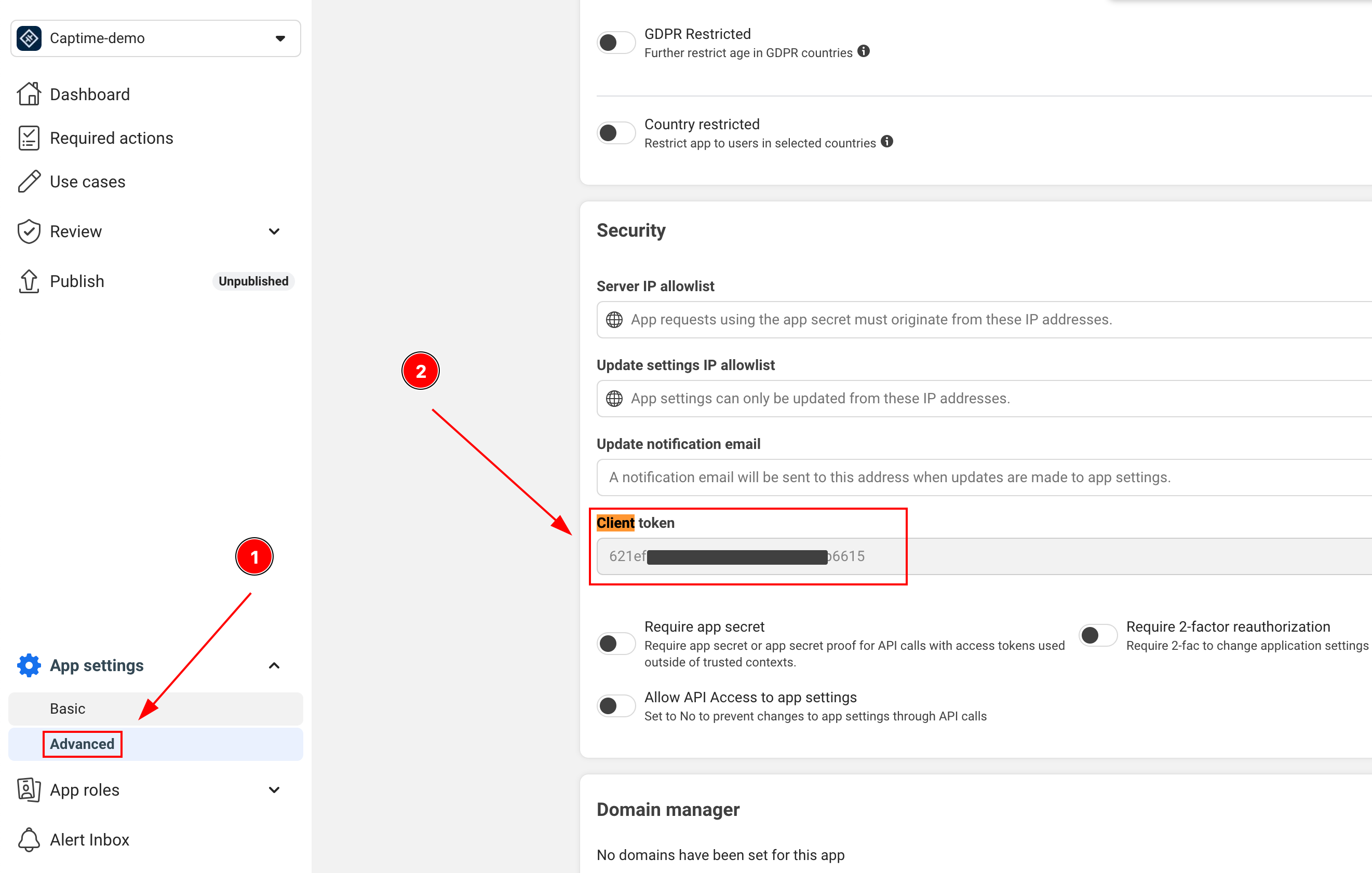
-
APP_ID: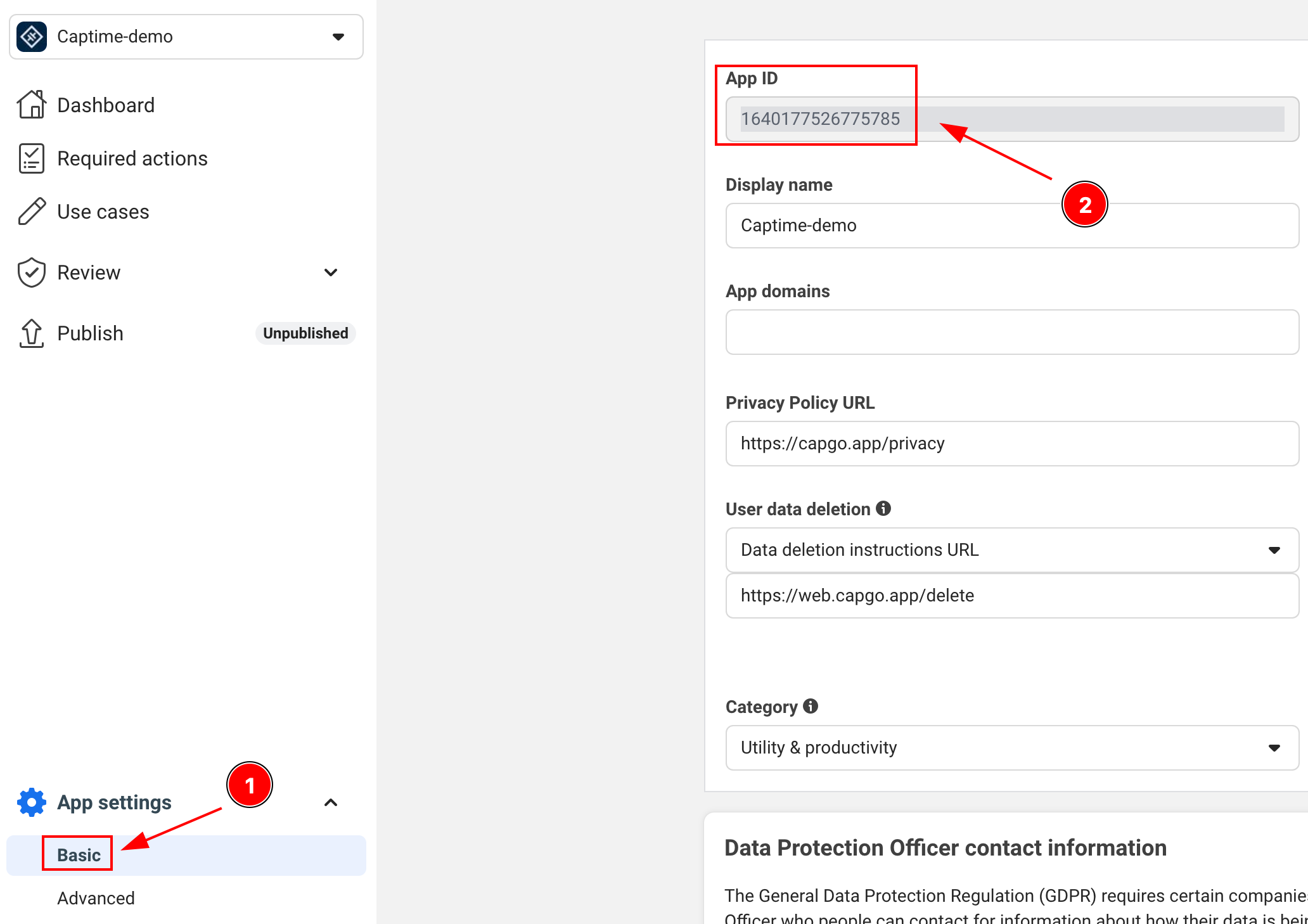
-
APP_NAME: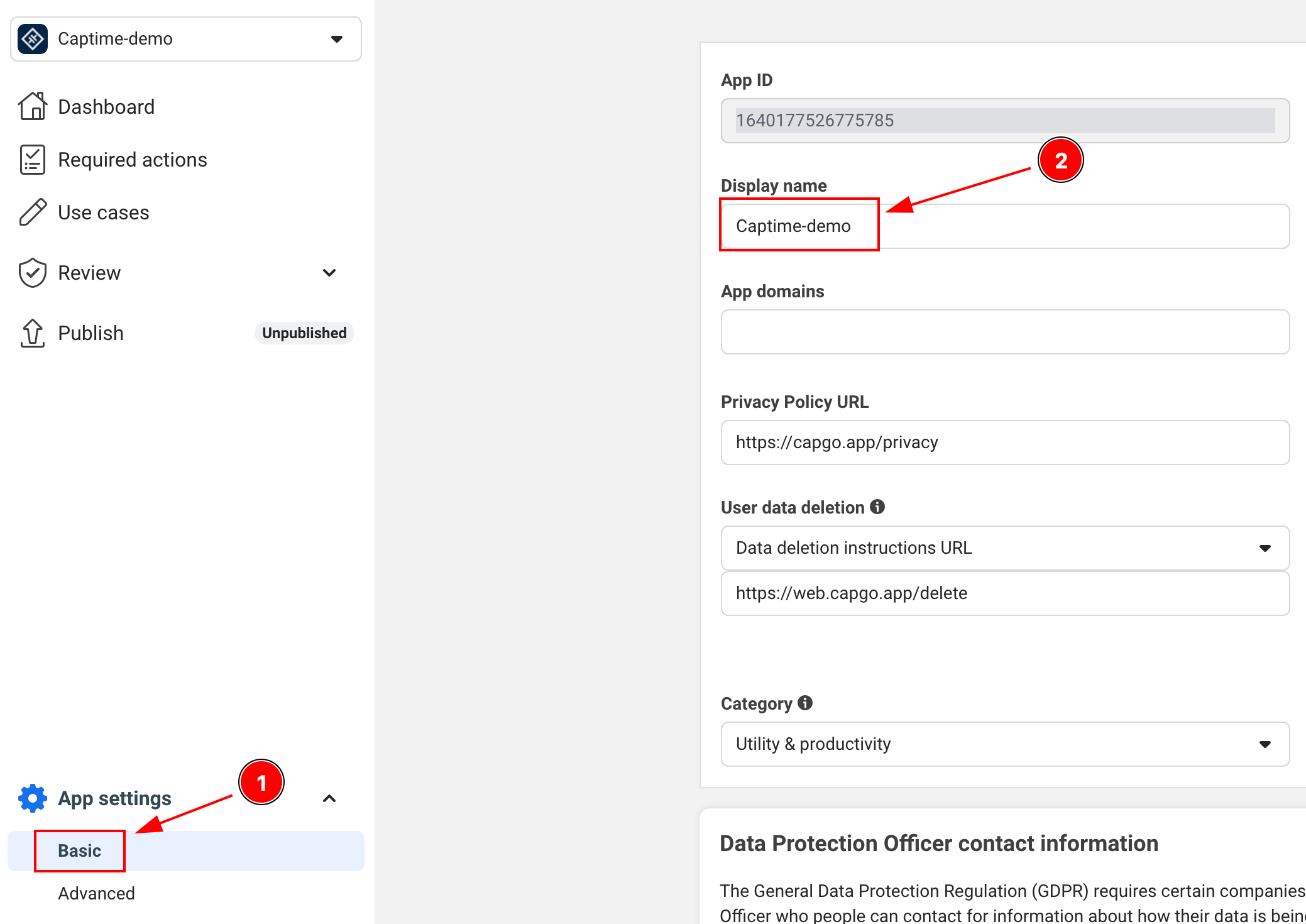
Facebook 비즈니스 로그인
“Facebook Business Login” 섹션이 플러그인은 비즈니스 관련 기능 및 권한을 위한 Facebook Business Login을 지원합니다. 비즈니스 계정은 일반 소비자 로그인 외에도 Instagram 및 Pages 관리 등 추가 권한을 요청할 수 있습니다.
지원되는 비즈니스 권한은 다음과 같습니다:
instagram_basic- Instagram Basic Display API 액세스 권한instagram_manage_insights- Instagram Insights 액세스 권한pages_show_list- 사용자가 관리하는 Pages 목록pages_read_engagement- Pages의 참여 데이터 읽기 권한pages_manage_posts- Pages의 게시물 관리 권한business_management- 비즈니스 자산 관리
참고하세요: 예제 앱의 Facebook 권한 참조 전체 권한 목록을 확인하려면.
설정 요구 사항:
- Facebook Developer Console에서 Facebook 앱을 Business 앱으로 설정해야 합니다.
- 비즈니스 권한은 프로덕션 사용 전 Facebook App Review가 필요할 수 있습니다.
- 앱은 Facebook의 Business Use Case 정책을 준수해야 합니다.
Instagram Basic Access
“Instagram Basic Access” 섹션await SocialLogin.initialize({ facebook: { appId: 'your-business-app-id', clientToken: 'your-client-token', },});
const res = await SocialLogin.login({ provider: 'facebook', options: { permissions: [ 'email', 'public_profile', 'instagram_basic', 'pages_show_list', 'pages_read_engagement', ], },});
const profile = await SocialLogin.providerSpecificCall({ call: 'facebook#getProfile', options: { fields: ['id', 'name', 'email', 'instagram_business_account'], },});페이지 관리
“Pages Management” 섹션const res = await SocialLogin.login({ provider: 'facebook', options: { permissions: [ 'email', 'pages_show_list', 'pages_manage_posts', 'pages_read_engagement', ], },});
const profile = await SocialLogin.providerSpecificCall({ call: 'facebook#getProfile', options: { fields: ['id', 'name', 'accounts{id,name,instagram_business_account}'], },});주의 사항:
- App Review를 받기 전, 테스트 사용자 및 개발용 앱을 통해 비즈니스 권한을 테스트할 수 있습니다.
- 대부분의 비즈니스 권한은 프로덕션 환경에서 사용하기 전 Facebook App Review가 필요합니다.
- Business API마다 Rate Limit이 다릅니다. 출시 전 Facebook의 최신 플랫폼 문서를 확인하세요.
- 앱을 설정할 때는 Facebook Business Integration Guide를 참조하세요.
Android 설정
“Android Setup” 섹션-
다음 항목에 internet permission을 추가하세요:
AndroidManifest.xml다음 줄이 포함되어 있는지 확인하세요:
<uses-permission android:name="android.permission.INTERNET"/> -
Android 키 해시 생성하기
Facebook에서 요구하는 필수 보안 단계입니다. 터미널을 열고 다음 명령어를 실행하세요:
터미널 창 keytool -exportcert -alias androiddebugkey -keystore ~/.android/debug.keystore | openssl sha1 -binary | openssl base64 -A비밀번호 입력 프롬프트가 나오면 다음을 사용하세요:
android -
Facebook 앱에 키 해시 추가하기
- Facebook Developers의 앱 대시보드로 이동하세요
- Settings > Basic 메뉴로 이동합니다
- “Android” 섹션까지 스크롤하세요
- Android가 없다면 “Add Platform”을 클릭해 정보를 입력하세요
- 생성한 키 해시를 추가합니다
- 프로덕션 환경을 위해 debug와 release 키 해시를 모두 추가하세요
-
다음 내용을 포함하도록
AndroidManifest.xml를 업데이트하세요:<application>...<activity android:name="com.facebook.FacebookActivity"android:configChanges="keyboard|keyboardHidden|screenLayout|screenSize|orientation"android:label="@string/app_name" /><activityandroid:name="com.facebook.CustomTabActivity"android:exported="true"><intent-filter><action android:name="android.intent.action.VIEW" /><category android:name="android.intent.category.DEFAULT" /><category android:name="android.intent.category.BROWSABLE" /><data android:scheme="FB[APP_ID]" /></intent-filter></activity></application>
iOS 설정
“iOS Setup” 섹션-
Facebook Developer Console에서 iOS 플랫폼 추가하기
- Facebook Developers에서 앱 대시보드로 이동하세요.
- Settings > Basic으로 이동하세요.
- 페이지 맨 아래까지 스크롤한 다음 “Add Platform”을 클릭하세요.
- iOS를 선택하고 필요한 정보를 입력하세요.
-
Xcode 프로젝트를 열고 Info.plist로 이동하세요.
-
Info.plist에 다음 항목을 추가하세요:
<key>FacebookAppID</key><string>[APP-ID]</string><key>FacebookClientToken</key><string>[CLIENT-TOKEN]</string><key>FacebookDisplayName</key><string>[APP-NAME]</string><key>LSApplicationQueriesSchemes</key><array><string>fbapi</string><string>fb-messenger-share-api</string></array><key>CFBundleURLTypes</key><array><dict><key>CFBundleURLSchemes</key><array><string>fb[APP-ID]</string></array></dict></array> -
다음 항목을 수정하세요:
AppDelegate.swiftimport FBSDKCoreKit@UIApplicationMainclass AppDelegate: UIResponder, UIApplicationDelegate {func application(_ application: UIApplication, didFinishLaunchingWithOptions launchOptions: [UIApplication.LaunchOptionsKey: Any]?) -> Bool {// Override point for customization after application launch.// Initialize Facebook SDKFBSDKCoreKit.ApplicationDelegate.shared.application(application,didFinishLaunchingWithOptions: launchOptions)return true}func application(_ app: UIApplication, open url: URL, options: [UIApplication.OpenURLOptionsKey: Any] = [:]) -> Bool {// Called when the app was launched with a url. Feel free to add additional processing here,// but if you want the App API to support tracking app url opens, make sure to keep this callif (FBSDKCoreKit.ApplicationDelegate.shared.application(app,open: url,sourceApplication: options[UIApplication.OpenURLOptionsKey.sourceApplication] as? String,annotation: options[UIApplication.OpenURLOptionsKey.annotation])) {return true;} else {return ApplicationDelegateProxy.shared.application(app, open: url, options: options)}}}
앱에서 Facebook Login 사용하기
“Using Facebook Login in Your App” 섹션-
앱에 Facebook 로그인 초기화하기
import { SocialLogin } from '@capgo/capacitor-social-login';// Initialize during app startupawait SocialLogin.initialize({facebook: {appId: 'APP_ID',clientToken: 'CLIENT_TOKEN',}}) -
로그인 함수 구현하기
async function loginWithFacebook() {try {const result = await SocialLogin.login({provider: 'facebook',options: {permissions: ['email', 'public_profile'],limitedLogin: false // See Limited Login section below for important details}});console.log('Facebook login result:', result);// Handle successful login} catch (error) {console.error('Facebook login error:', error);// Handle error}} -
사용자 프로필 데이터 가져오기
로그인에 성공하면 다음과 같이 추가 프로필 정보를 가져올 수 있습니다:
async function getFacebookProfile() {try {const profileResponse = await SocialLogin.providerSpecificCall({call: 'facebook#getProfile',options: {fields: ['id', 'name', 'email', 'first_name', 'last_name', 'picture']}});console.log('Facebook profile:', profileResponse.profile);return profileResponse.profile;} catch (error) {console.error('Failed to get Facebook profile:', error);return null;}}// Example usage after loginasync function loginAndGetProfile() {const loginResult = await loginWithFacebook();if (loginResult) {const profile = await getFacebookProfile();if (profile) {console.log('User ID:', profile.id);console.log('Name:', profile.name);console.log('Email:', profile.email);console.log('Profile Picture:', profile.picture?.data?.url);}}}토큰 유형 제한:
getProfile호출은 액세스 토큰 (트래킹이 허용된 표준 로그인)이 있는 경우에만 작동합니다. 사용자가 트래킹을 거부했거나 제한된 로그인(JWT 토큰만 사용)을 사용하는 경우 이 호출은 실패합니다. 이 경우 초기 로그인 응답에서 제공된 프로필 데이터를 사용하세요.
⚠️ 중요: 백엔드 토큰 처리
“⚠️ 주의: 백엔드 토큰 처리” 섹션백엔드에서 다음 두 가지 서로 다른 토큰 타입을 처리해야 합니다. iOS 사용자는 App Tracking Transparency 선택에 따라 access token 또는 JWT token을 받을 수 있는 반면, Android 사용자는 항상 access token을 받기 때문입니다.
플랫폼별 토큰 유형
“플랫폼별 토큰 타입” 섹션| 플랫폼 | limitedLogin 설정 | 사용자 ATT 선택 사항 | 결과 토큰 유형 |
|---|---|---|---|
| iOS | true | 모든 플랫폼 | JWT 토큰 |
| iOS | false | 트래킹 허용 | 액세스 토큰 |
| iOS | false | 트래킹 거부 | JWT 토큰 (자동 재정의) |
| Android | 모든 플랫폼 | 해당 없음 | Access Token (항상) |
-
토큰 유형 감지 및 처리
async function loginWithFacebook() {try {const loginResult = await SocialLogin.login({provider: 'facebook',options: {permissions: ['email', 'public_profile'],limitedLogin: false // iOS: depends on ATT, Android: ignored}});if (loginResult.accessToken) {// Access token (Android always, iOS when tracking allowed)return handleAccessToken(loginResult.accessToken.token);} else if (loginResult.idToken) {// JWT token (iOS only when tracking denied or limitedLogin: true)return handleJWTToken(loginResult.idToken);}} catch (error) {console.error('Facebook login error:', error);}} -
Firebase 연동 예시
import { OAuthProvider, FacebookAuthProvider, signInWithCredential } from 'firebase/auth';async function handleAccessToken(accessToken: string, nonce: string) {// For access tokens, use OAuthProvider (new method)const fbOAuth = new OAuthProvider("facebook.com");const credential = fbOAuth.credential({idToken: accessToken,rawNonce: nonce});try {const userResponse = await signInWithCredential(auth, credential);return userResponse;} catch (error) {console.error('Firebase OAuth error:', error);return false;}}async function handleJWTToken(jwtToken: string) {// For JWT tokens, send to your backend for validationtry {const response = await fetch('/api/auth/facebook-jwt', {method: 'POST',headers: {'Content-Type': 'application/json',},body: JSON.stringify({ jwtToken })});const result = await response.json();return result;} catch (error) {console.error('JWT validation error:', error);return false;}} -
Backend JWT 검증
// Backend: Validate JWT token from Facebookimport jwt from 'jsonwebtoken';import { Request, Response } from 'express';app.post('/api/auth/facebook-jwt', async (req: Request, res: Response) => {const { jwtToken } = req.body;try {// Verify JWT token with Facebook's public key// See: https://developers.facebook.com/docs/facebook-login/limited-login/token/validating/#standard-claimsconst decoded = jwt.verify(jwtToken, getFacebookPublicKey(), {algorithms: ['RS256'],audience: process.env.FACEBOOK_APP_ID,issuer: 'https://www.facebook.com' // From: https://www.facebook.com/.well-known/openid-configuration/?_rdr});// Extract user info from JWTconst userInfo = {id: decoded.sub,email: decoded.email,name: decoded.name,isJWTAuth: true};// Create your app's session/tokenconst sessionToken = createUserSession(userInfo);res.json({success: true,token: sessionToken,user: userInfo});} catch (error) {console.error('JWT validation failed:', error);res.status(401).json({ success: false, error: 'Invalid token' });}}); -
범용 백엔드 토큰 핸들러
// Handle both token types in your backendasync function authenticateFacebookUser(tokenData: any) {if (tokenData.accessToken) {// Handle access token - validate with Facebook Graph APIconst response = await fetch(`https://graph.facebook.com/me?access_token=${tokenData.accessToken}&fields=id,name,email`);const userInfo = await response.json();return {user: userInfo,tokenType: 'access_token',expiresIn: tokenData.expiresIn || 3600};} else if (tokenData.jwtToken) {// Handle JWT token - decode and validate// See: https://developers.facebook.com/docs/facebook-login/limited-login/token/validating/#standard-claimsconst decoded = jwt.verify(tokenData.jwtToken, getFacebookPublicKey());return {user: {id: decoded.sub,name: decoded.name,email: decoded.email},tokenType: 'jwt',expiresIn: decoded.exp - Math.floor(Date.now() / 1000)};} else {throw new Error('No valid token provided');}}
주요 고려 사항
“주요 고려 사항” 섹션액세스 토큰 (Standard Login):
- ✅ Android: 항상 사용 가능 (iOS 전용 제한 미적용)
- ✅ iOS: 사용자가 앱 추적을 명시적으로 허용할 때만 가능
- ✅ Facebook Graph API 접근 가능
- ✅ 더 긴 만료 시간
- ✅ 더 많은 사용자 데이터 활용 가능
- ❌ iOS에서 사용 빈도가 낮아지는 추세 사용자들이 추적 허용을 거부하는 사례가 늘고 있기 때문
JWT Token (iOS 전용 개인정보 보호 모드):
- ❌ Android: 발생하지 않음 (미지원)
- ✅ iOS: 추적이 거부된 경우 또는
limitedLogin: true - ✅ iOS 사용자 개인정보 보호 설정 준수
- ❌ 기본 사용자 정보만 포함
- ❌ 짧은 만료 시간
- ❌ Facebook Graph API 접근 불가
- ⚠️ 이제 iOS 사용자에게 가장 흔한 시나리오
플랫폼별 동작 방식:
- iOS 앱: access token과 JWT token을 모두 처리해야 합니다
- Android 앱: access token만 처리하면 됩니다
- 크로스 플랫폼 앱: 두 가지 token 처리 방식을 모두 구현해야 합니다
보안 컨텍스트 요구 사항 (Web/Capacitor)
“보안 컨텍스트 요구 사항 (Web/Capacitor)” 섹션Crypto API 제한 사항
“Crypto API 제한 사항” 섹션업데이트된 Facebook 로그인 흐름에는 Web Crypto API nonce 생성을 위한 기능이 필요하며, 이는 오직 secure contexts에서만 사용 가능합니다:
// This requires secure context (HTTPS or localhost)async function sha256(message: string) { const msgBuffer = new TextEncoder().encode(message); const hashBuffer = await crypto.subtle.digest("SHA-256", msgBuffer); // ❌ Fails in insecure context // ...}개발 환경 문제
“개발 환경 문제” 섹션일반적인 문제: ionic serve HTTP URL 사용 시 Facebook 인증 오류 발생
| 환경 | Crypto API 사용 가능 여부 | Facebook Login 작동 여부 |
|---|---|---|
http://localhost:3000 | ✅ 작동함 | ✅ 작동함 |
http://127.0.0.1:3000 | ✅ 작동함 | ✅ 작동함 |
http://192.168.1.100:3000 | ❌ 작동 안 함 | ❌ 작동 안 함 |
https://any-domain.com | ✅ 작동함 | ✅ 작동함 |
Capacitor 개발을 위한 솔루션
“Capacitor 개발을 위한 솔루션” 섹션-
웹 테스트 시 localhost 사용
터미널 창 # Instead of ionic serve --host=0.0.0.0ionic serve --host=localhost -
Ionic에서 HTTPS 활성화하기
터미널 창 ionic serve --ssl -
실제 기기에서 테스트하기
터미널 창 # Capacitor apps run in secure context on devicesionic cap run iosionic cap run android -
개발용 대체 nonce 생성 방식
async function generateNonce() {if (typeof crypto !== 'undefined' && crypto.subtle) {// Secure context - use crypto.subtlereturn await sha256(Math.random().toString(36).substring(2, 10));} else {// Fallback for development (not secure for production)console.warn('Using fallback nonce - not secure for production');return btoa(Math.random().toString(36).substring(2, 10));}}
Firebase 연동 참고 사항
“Firebase 연동 참고 사항” 섹션최근 Firebase 문서를 보면 로그인 설정과 관계없이 Facebook 인증 시 nonce가 포함된 JWT 토큰을 요구합니다. 이 방식은 다음 두 경우 모두에 적용됩니다. limitedLogin: true 및 limitedLogin: false:
// Both modes can return JWT tokens depending on user choice const loginResult = await SocialLogin.login({ provider: 'facebook', options: { permissions: ['email', 'public_profile'], limitedLogin: false, // true = always JWT, false = depends on user tracking choice nonce: nonce } });개발 시 제한 사항: 만약 ionic serve 를 네트워크 IP(localhost 제외)에서 사용 중이라면, crypto API 제한으로 인해 Facebook 로그인이 실패합니다. 웹 테스트 시에는 localhost 또는 HTTPS를 사용하세요.
문제 해결
“Troubleshooting” 섹션자주 발생하는 문제 및 해결 방법
“자주 발생하는 문제 및 해결 방법” 섹션-
Android 키 해시(Key hash) 오류
- Facebook 대시보드에 올바른 키 해시를 추가했는지 다시 확인하세요
- Release 빌드의 경우, debug와 release 키 해시를 모두 추가했는지 확인하세요
- 해시 생성 시 올바른 keystore를 사용 중인지 확인하세요
-
Facebook 로그인 버튼이 나타나지 않음
- 모든 manifest 항목이 올바른지 확인하세요
- Facebook App ID와 Client Token이 정확한지 확인하세요
- SDK가 제대로 초기화되었는지 확인하세요
-
자주 발생하는 iOS 문제
- 모든 Info.plist 항목이 올바른지 확인하세요
- URL scheme 설정 확인
- Bundle ID가 Facebook dashboard에 등록된 값과 일치하는지 확인하세요
테스트
“Testing” 섹션-
테스트 전, Facebook Developer Console에서 테스트 사용자를 추가하세요
- Roles > Test Users로 이동
- 테스트 사용자 생성
- 테스트 시 다음 계정 정보를 사용하세요
-
Debug 및 Release build 모두 테스트하세요
- Debug key hash를 사용한 Debug build
- Release key hash를 사용한 Release build
- 에뮬레이터와 실기기 모두에서 테스트하세요
다음 항목을 포함하여 전체 로그인 흐름을 반드시 테스트하세요:
- 로그인 성공
- 로그인 취소
- 에러 처리
- 로그아웃 기능
Facebook Login Setup 단계 계속하기
“Facebook Login Setup 단계 계속하기” 섹션사용 중이라면 Facebook Login 설정 인증 및 계정 흐름을 설계할 때, 이를 다음 항목과 연결하세요: @capgo/capacitor-social-login 사용하기 @capgo/capacitor-social-login를 사용하여 네이티브 기능을 구현하는 경우, @capgo/capacitor-social-login @capgo/capacitor-social-login의 구현 세부 사항은, @capgo/capacitor-passkey @capgo/capacitor-passkey의 구현 세부 사항은 다음을 참고하세요, @capgo/capacitor-native-biometric @capgo/capacitor-native-biometric의 구현 세부 사항은, 2단계 인증 2단계 인증의 구현 세부 사항에 대해서는


